The Styrian
Pumpkin Seed Oil Journal
The Styrian
Pumpkin Seed Oil Journal
- The Styrian Pumpkin Seed Oil Journal
Shop EN
pumpkinseedoil.ccShop DE
kuerbiskernoel.cc
About
This website also contains some content created with the support of AI.
Pumpkin Seed Oil for Hair Loss: What the Studies Really Show
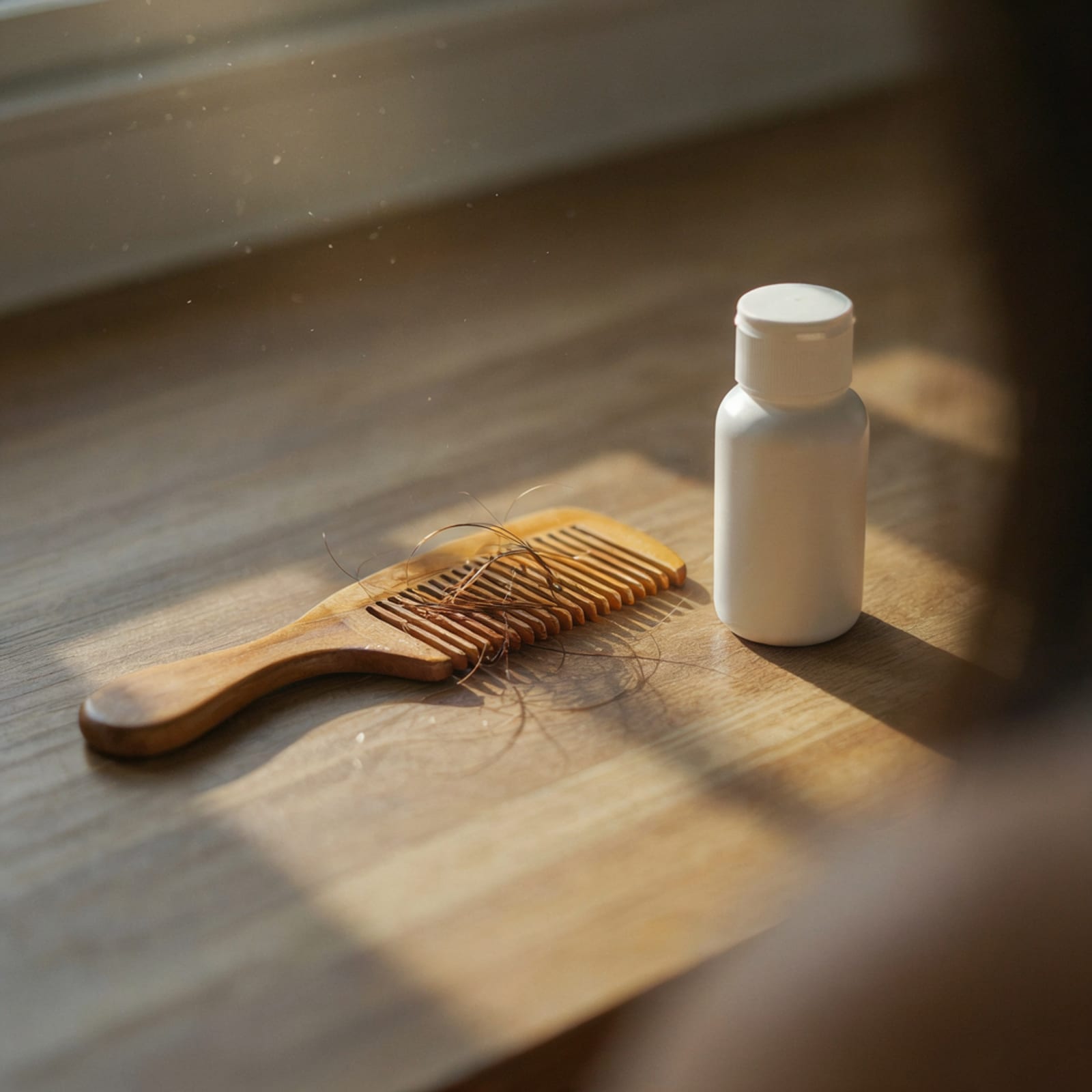
The comb sits on the edge of the sink, a few more hairs caught in it than before, and the search online almost writes itself: natural ways to slow hair loss. Follow that search far enough and pumpkin seed oil turns up. That is no accident and no empty hype either — behind the interest sits a randomised, placebo-controlled trial with a genuinely positive result. That is why many people treat pumpkin seed oil as an option worth taking seriously, alongside good hair care and, where needed, a doctor's advice. This article summarises what the research actually found and how to read it sensibly. It is not medical advice.
The Study With a Clear Result
In 2014, a randomised controlled trial tested an oral, standardised pumpkin seed extract (400 mg daily) in men with androgenetic alopecia — the most common pattern of hereditary hair thinning. Seventy-six men at a single site took part, half receiving the extract and half a placebo. Then came weeks of waiting, with no visible sign of any effect. Only after 24 weeks did the difference show clearly: in the measured area, average hair count in the extract group had risen by roughly 40% from baseline, while the placebo group lagged well behind.
What Those 24 Weeks Actually Mean
That is a solid signal — pumpkin seed preparations can measurably support this pattern of thinning. What matters is being precise about what was actually tested: a standardised extract in capsule form, not the tablespoon of culinary oil from the kitchen. Even so, this is exactly the finding that keeps pumpkin seed oil coming up in hair conversations. For the wider context, see the effects overview.
Why That Matters for You
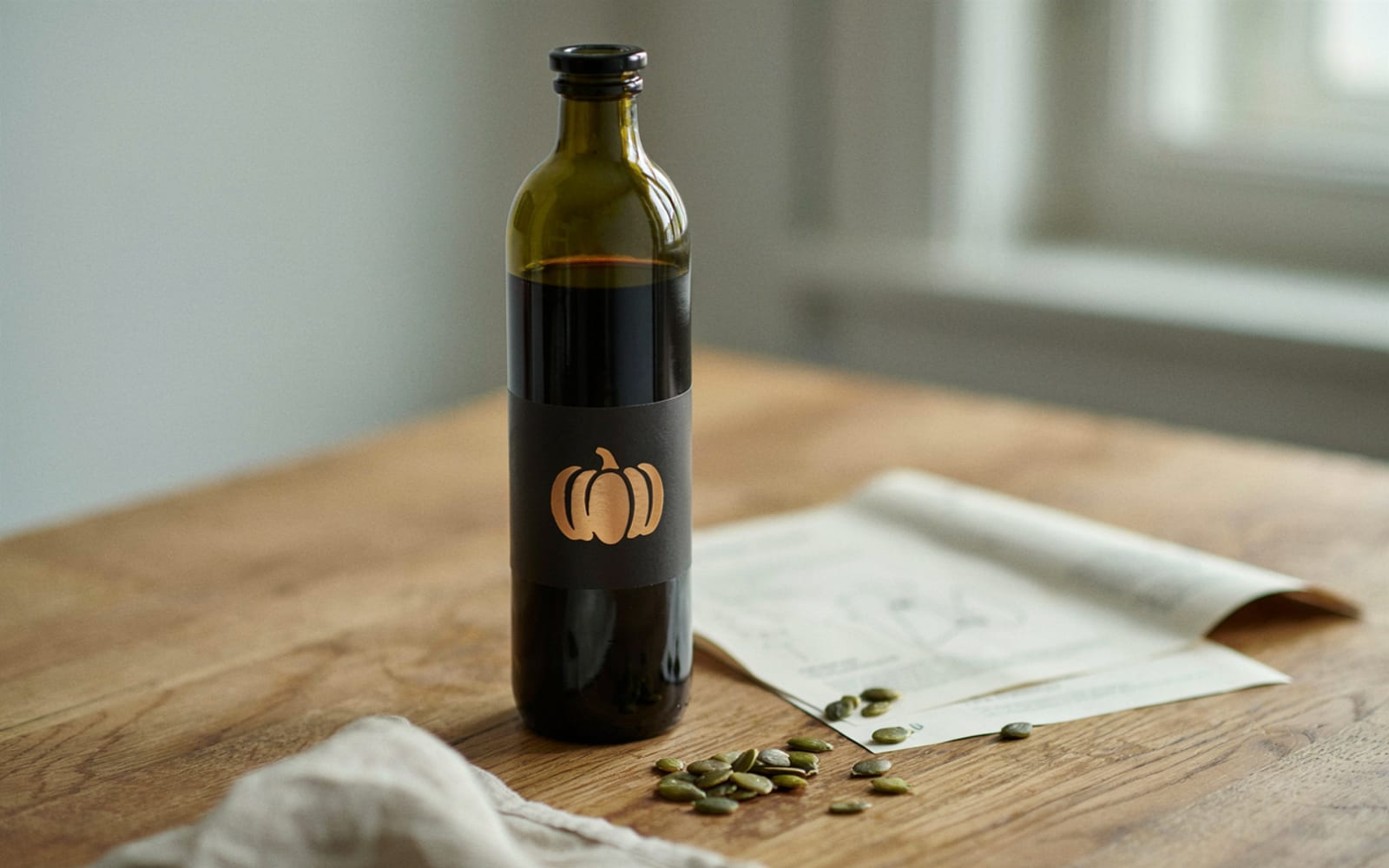
The practical question most readers want answered is simple: is pumpkin seed oil worth it at all? The study's honest answer is yes — as a promising, natural lead with a measurable effect under controlled conditions. If you already use Styrian pumpkin seed oil in the kitchen, you are choosing the same plant in its culinary form: roasted, cold-pressed, rich in useful fatty acids, and carrying the flavour that makes the oil distinctive. If concentrated formats interest you more, pumpkin seed oil capsules and how to take pumpkin seed oil offer a starting point. Culinary oil and study extract are not the same product — but they share the same story: pumpkin seed oil is more than a salad flourish.
Bonus: Caring for Hair and Scalp
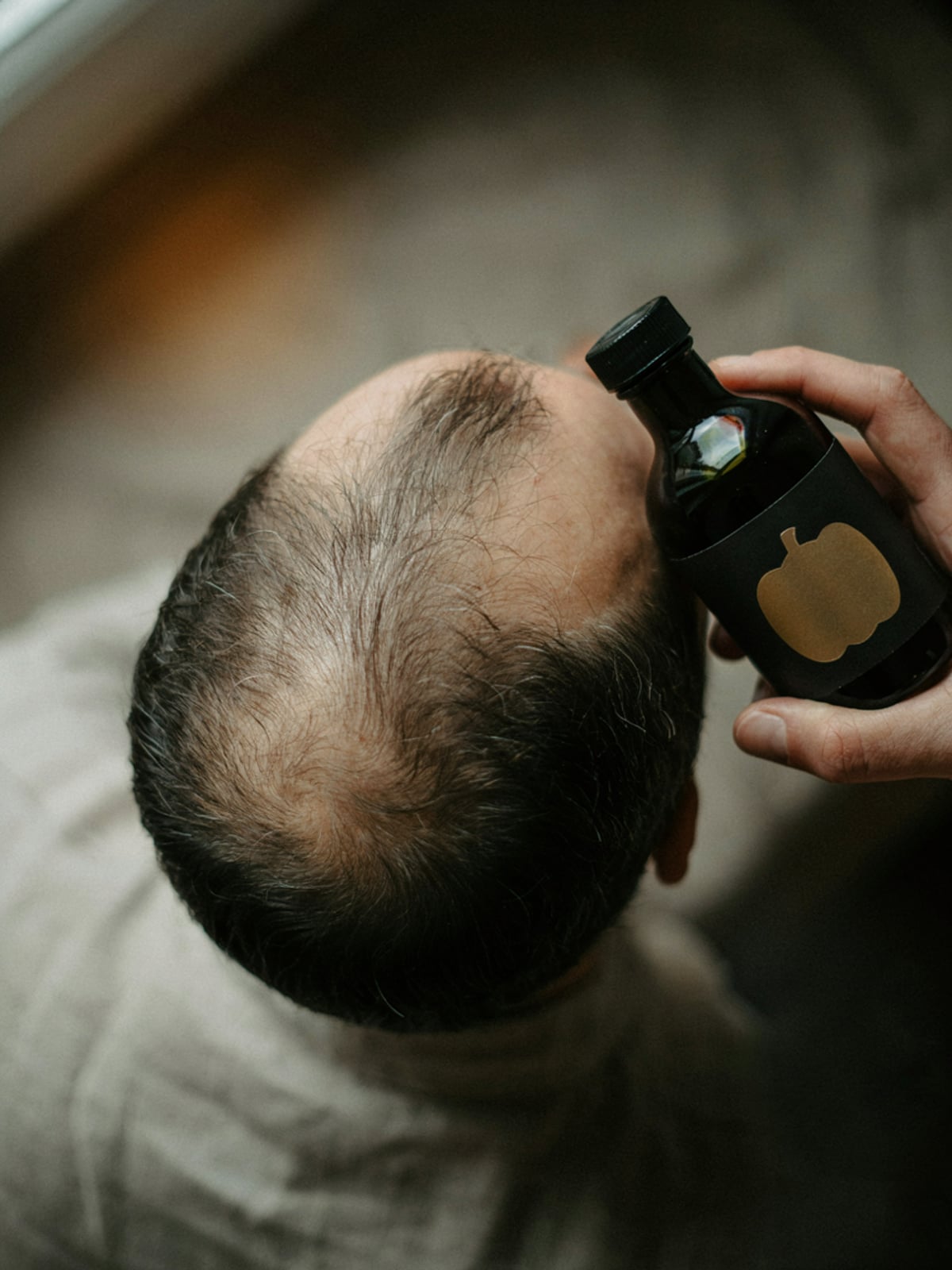
Separate from the oral research, plenty of people use pumpkin seed oil directly on hair and scalp — as a pre-wash treatment or a gentle conditioning step. Shine, softness, and a cared-for feel sit in the same family as other fine seed oils bring to hair. That is cosmetic care, not a treatment claim, and still a nice everyday benefit that fits the topic. More detail on that use lives on pumpkin seed oil for hair.
When a Doctor Is the Next Right Step

A strong study is a starting point, not a substitute for diagnosis and treatment when hair loss is significant. Hair loss can have many causes, and not every cause responds to the same approach. If it is worrying you, talk to a doctor or a dermatologist before relying on a supplement alone.
Reading the Finding With Confidence — and Choosing Well
At the same time, you are entitled to read this finding positively: there is credible evidence that pumpkin seed extract can play a supportive role in hereditary thinning. If quality and origin matter to you, choose authentic Styrian oil with clear provenance — and enjoy it at the table every day regardless. Critical counterpoints stay openly visible in the criticism section; the focus here stays on what made this particular trial encouraging.
Ready to bring pumpkin seed oil into your routine, with real character and Styrian origin behind it? The next step is simple: choose the real oil and try it, while the comb on the sink slowly grows quieter.
Health notice: This page discusses topics related to health research and tradition. It is not medical advice. Do not use it to diagnose, treat, cure, or prevent any disease. Talk to a qualified healthcare professional before changing your diet or supplements.
Discover Styrian Kürbiskernöl for your kitchen
Shop now