The Styrian
Pumpkin Seed Oil Journal
The Styrian
Pumpkin Seed Oil Journal
- The Styrian Pumpkin Seed Oil Journal
Shop EN
pumpkinseedoil.ccShop DE
kuerbiskernoel.cc
About
This website also contains some content created with the support of AI.
Bottle and Pour
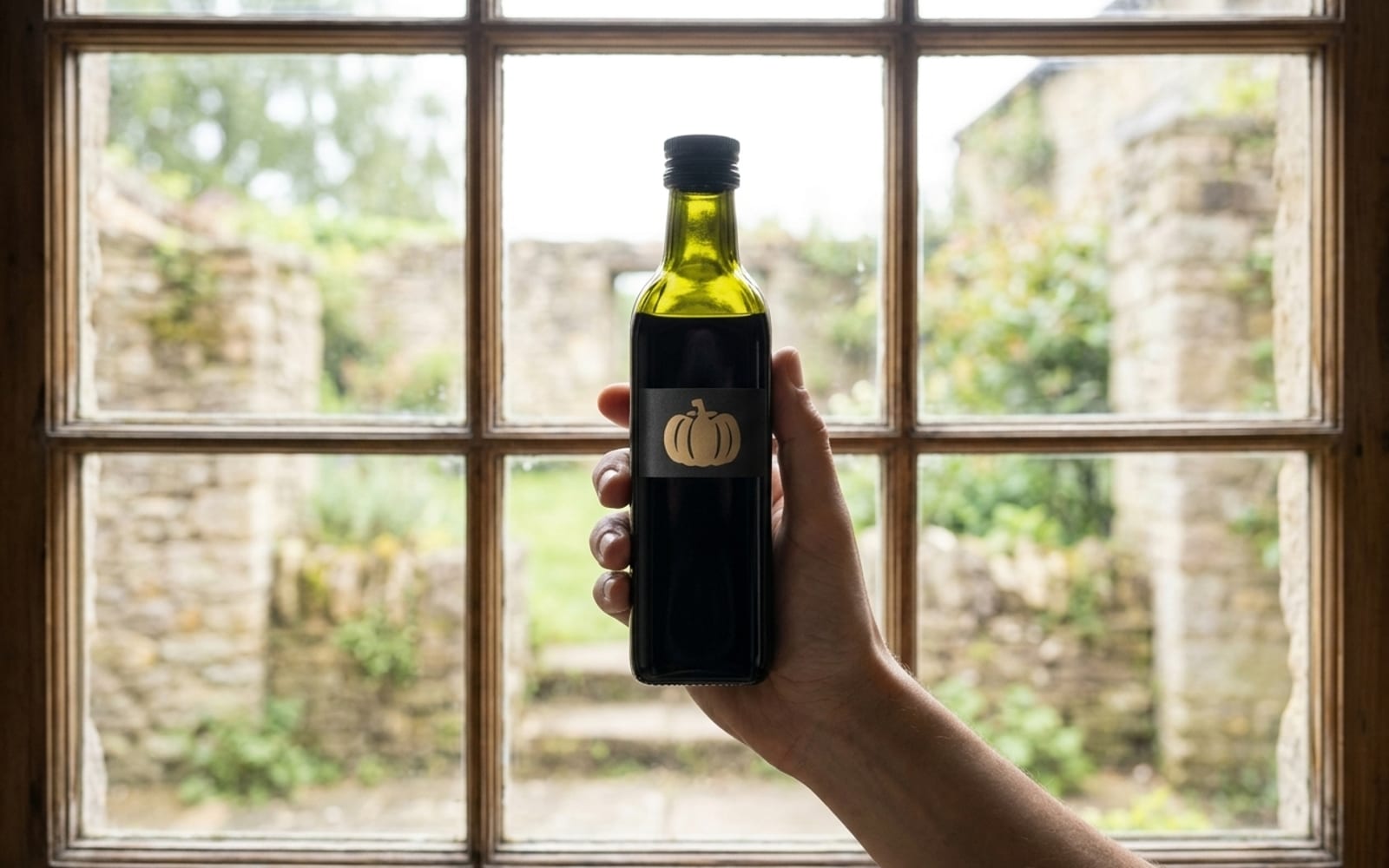
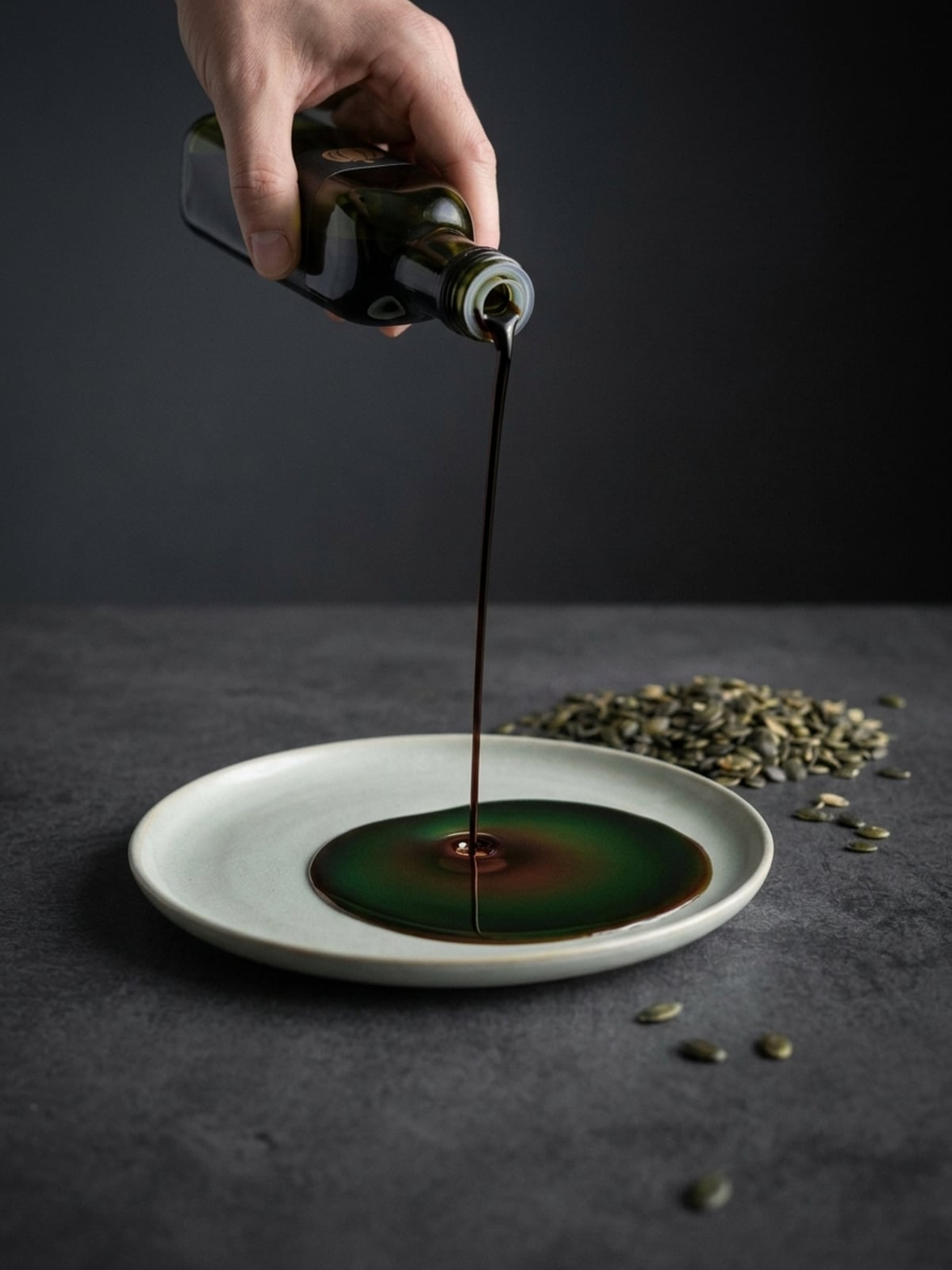
Hold the bottle up to the kitchen light and you could swear it holds ink. Tip a teaspoon over warm soup, and the very same liquid opens into deep green-gold. Anyone seeing this for the first time pauses with the spoon in mid-air. It is not a trick and not a dye — only light, layer thickness, and a pigment that only reveals itself in a thin film.
Black in the Glass
In a tall column of oil, almost no green wavelength of light makes it back to your eye. In dark glass especially, the liquid reads as nearly black. Producers choose that glass on purpose to shield the aroma from light — the side effect is that you rarely see the actual green until you pour. Short version: Why So Dark?. Product introduction: What Is Pumpkin Seed Oil.
Green on the Plate
The moment the oil lies as a thin film, light behaves differently: it passes through, scatters, and the green character appears — sometimes edged in reddish-brown depending on what sits underneath. Styrian tables have leaned on that small drama for generations: a spiral over pumpkin soup, a shine on tomato salad, a thin thread over soft eggs. Ideas for that: Cold Plates, Flavour Pairings.
Why the Roast Shapes the Colour Too
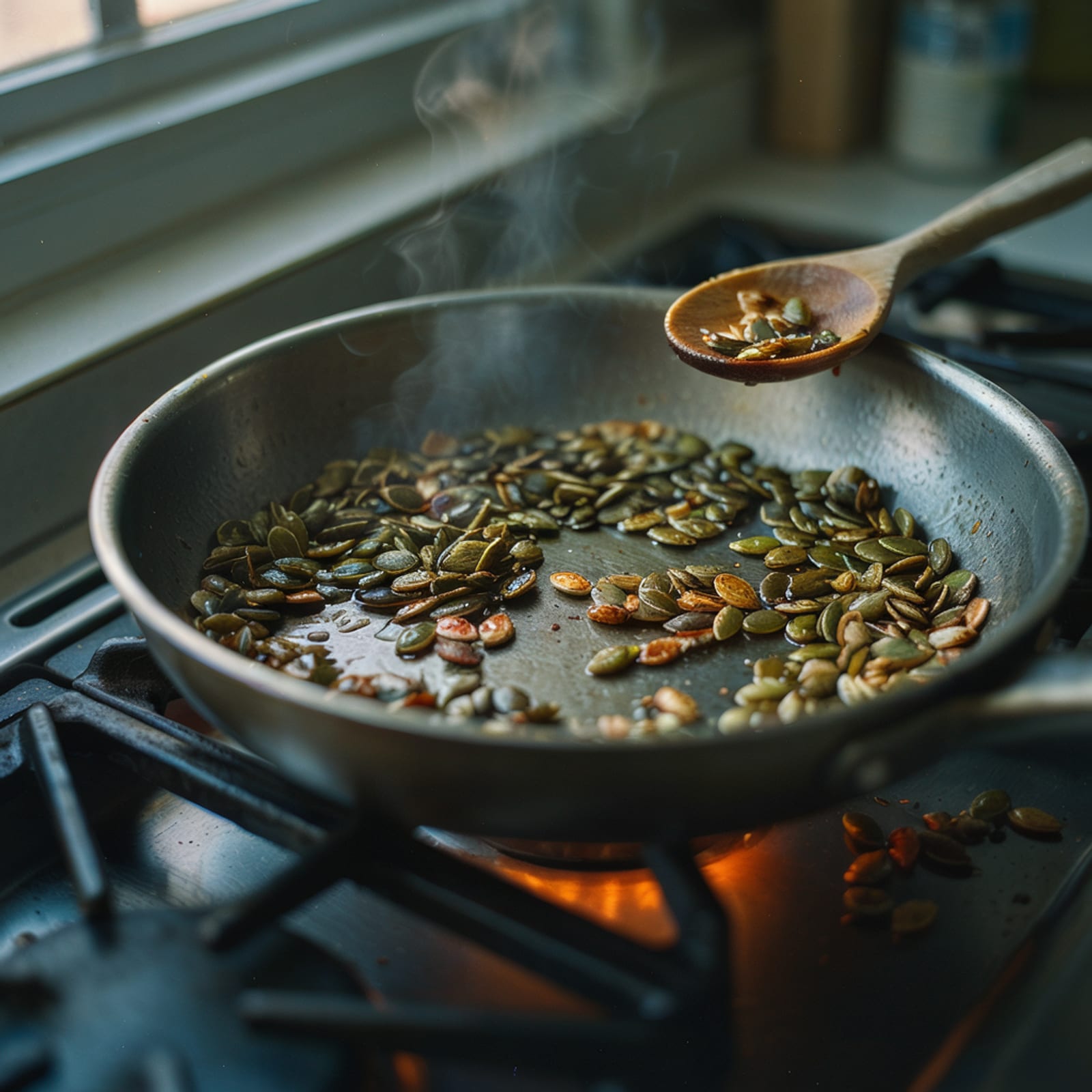
Traditional roasting before pressing builds aroma and colour depth at the same time. Milder blends therefore look lighter in the bottle and quieter on the plate — different from the full PGI character, not automatically worse, just a different intention. Reading labels: Blend or Pure?. Mill craft behind it: Roasting, Mill Visit.
The Moment of Pouring
Smell, taste, and colour arrive together, which is exactly why this moment stays in memory. The green reveal confirms what the nose already suspected: this is not a neutral supermarket fat sitting on the table. How much makes sense so the colour stays elegant rather than overwhelming: How Much per Salad?. How that first impression settles in: Taste Memory.
Keeping the Colour Honest
Colour lasts longer once light and heat stay away. Be careful, though — a rancid bottle can still look dark and unchanged while smelling wrong. Trust your nose over your eyes in that moment. Storage: Storage, Fridge FAQ, Rancid Smell.
A Habit Worth Keeping at the Table
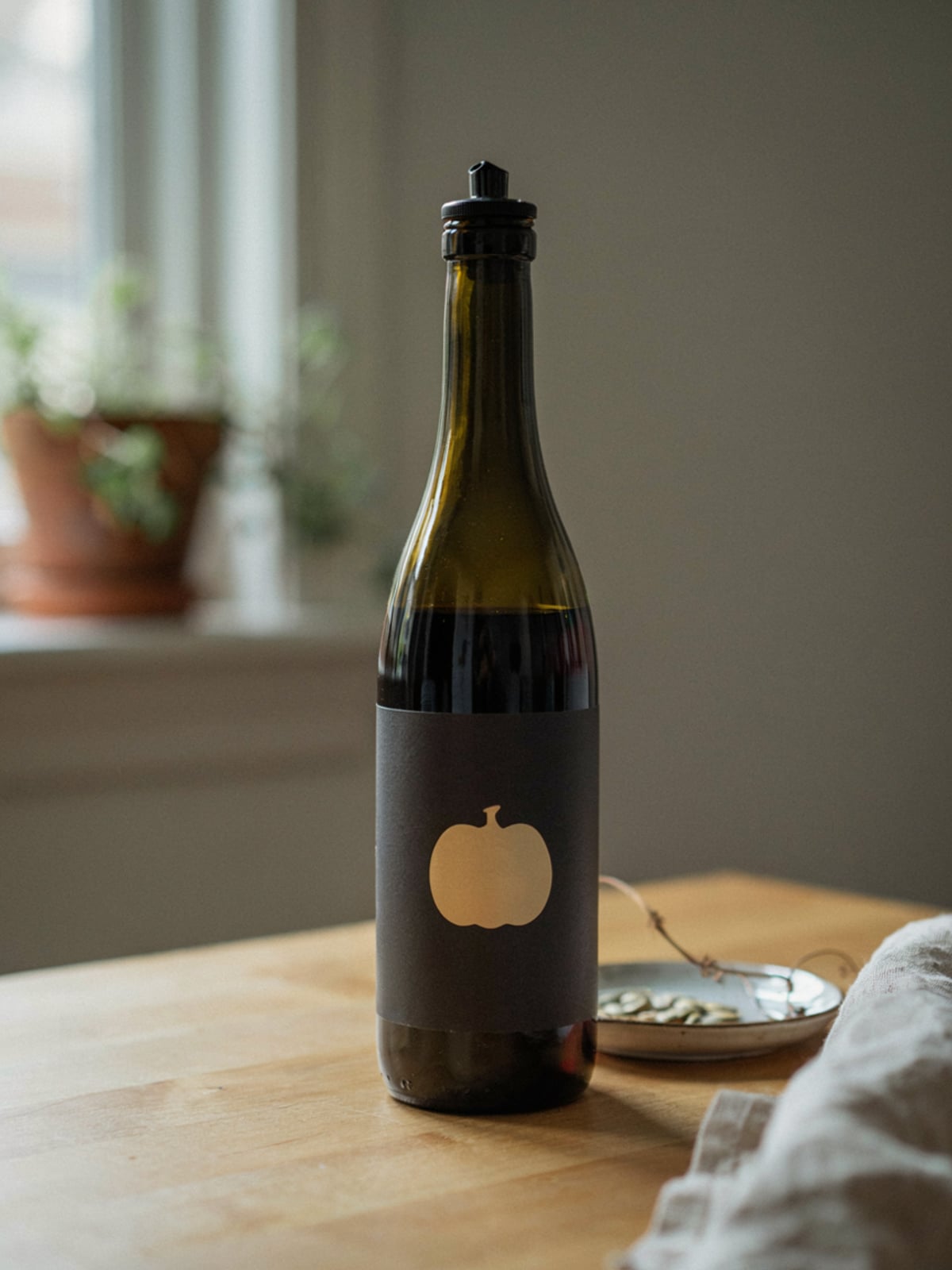
Pour where everyone can see the green appear — children learn faster from that than from any label. Afterward, one simple rule applies: finish, do not fry, so the bottle earns its price. Can You Cook with It?, Why So Expensive?. More field and table stories: Journal.
When Photos Exaggerate
Online photos sometimes show a green that no real plate ever matches under kitchen light. Trust your own pour over a filtered image: genuine oil can look olive-dark, jade, or brown-green depending on what sits beneath it, and that range is entirely normal. If a picture looks neon while your own bottle smells flat, believe your senses and check the FAQ.
Two Pictures, One Bottle
Black in the glass, green on the plate: keep both images in mind, and the dark bottle stops feeling mysterious. It becomes a tool you trust while shopping, cooking, and sharing — and every pour quietly retells the whole story.
Shop nutty roasted Styrian seed oil
Shop now