The Styrian
Pumpkin Seed Oil Journal
The Styrian
Pumpkin Seed Oil Journal
- The Styrian Pumpkin Seed Oil Journal
Shop EN
pumpkinseedoil.ccShop DE
kuerbiskernoel.cc
About
This website also contains some content created with the support of AI.
Pumpkin Seeds or Pumpkin Seed Oil: What Is the Difference?
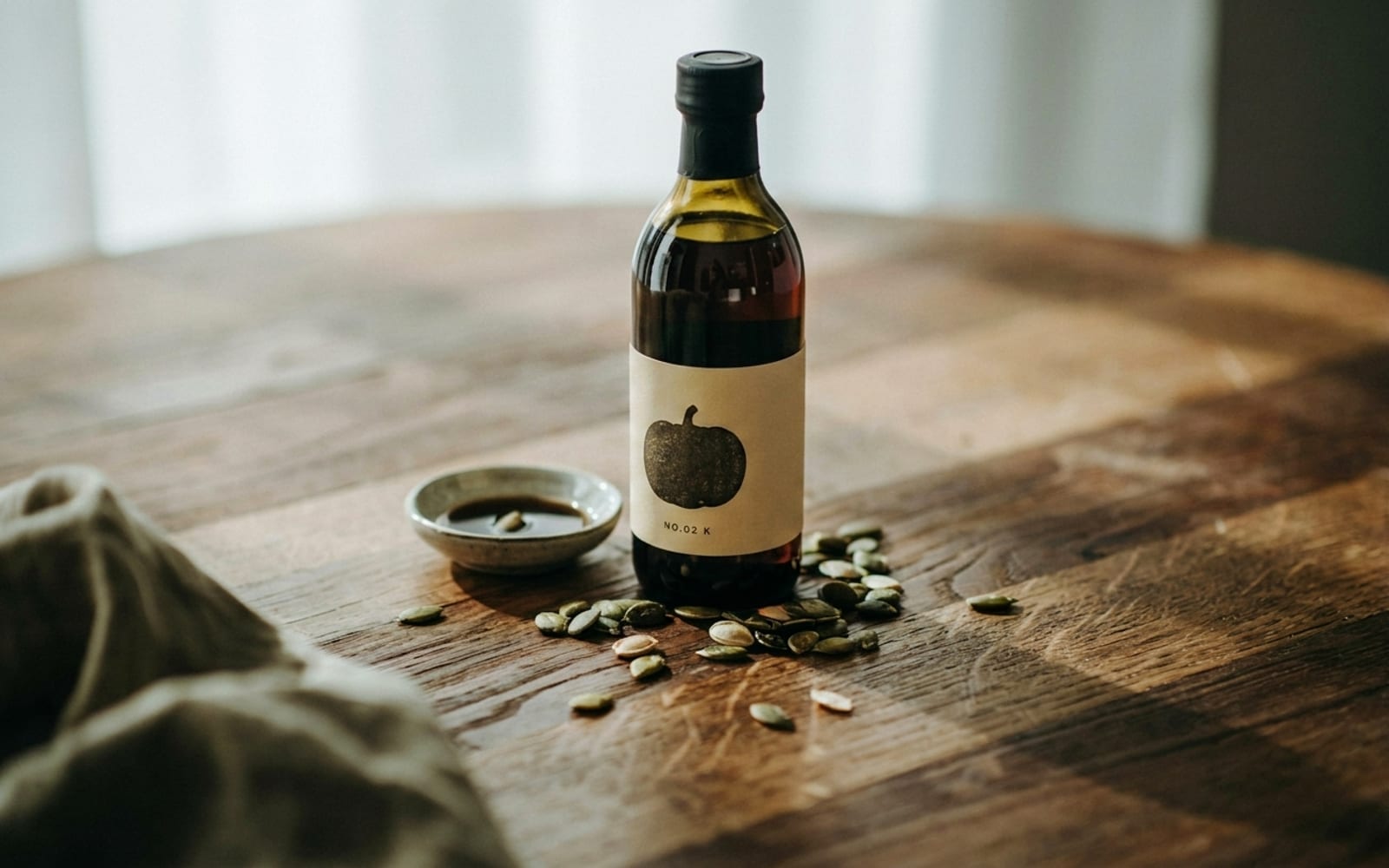
A spoonful of oil never replaces a handful of crunch scattered over a salad. And roasted seeds never bring the deep, dark colour and full roasted flavour that only pressed oil delivers. Both come from the same plant, often even the same harvest — and yet their paths through the kitchen split completely. Knowing which one to reach for saves disappointment on both sides.
One harvest, two paths
It starts in the same place: seeds get separated from the flesh, washed, spread out to dry. That's the point where what had been identical splits apart. Some seeds stay whole, get roasted, and go straight into bags as a snack — the pumpkin seed you might already know from salads or muesli. The rest travel on to the mill, where they're roasted more intensely, ground fine, and pressed — the oil then rests in a tank to settle before it's bottled. More on the plant behind both products lives under the Styrian oil pumpkin.
What happens to the whole seeds
Whole seeds have an easier route than the mill next door. They get roasted, sometimes lightly salted, then packed into bags or open containers — ready for the pan, the bread dough, or the breakfast bowl. Nothing in this path needs a press or a barrel. That simplicity is exactly why seeds and oil end up used so differently later on.
Two products, side by side
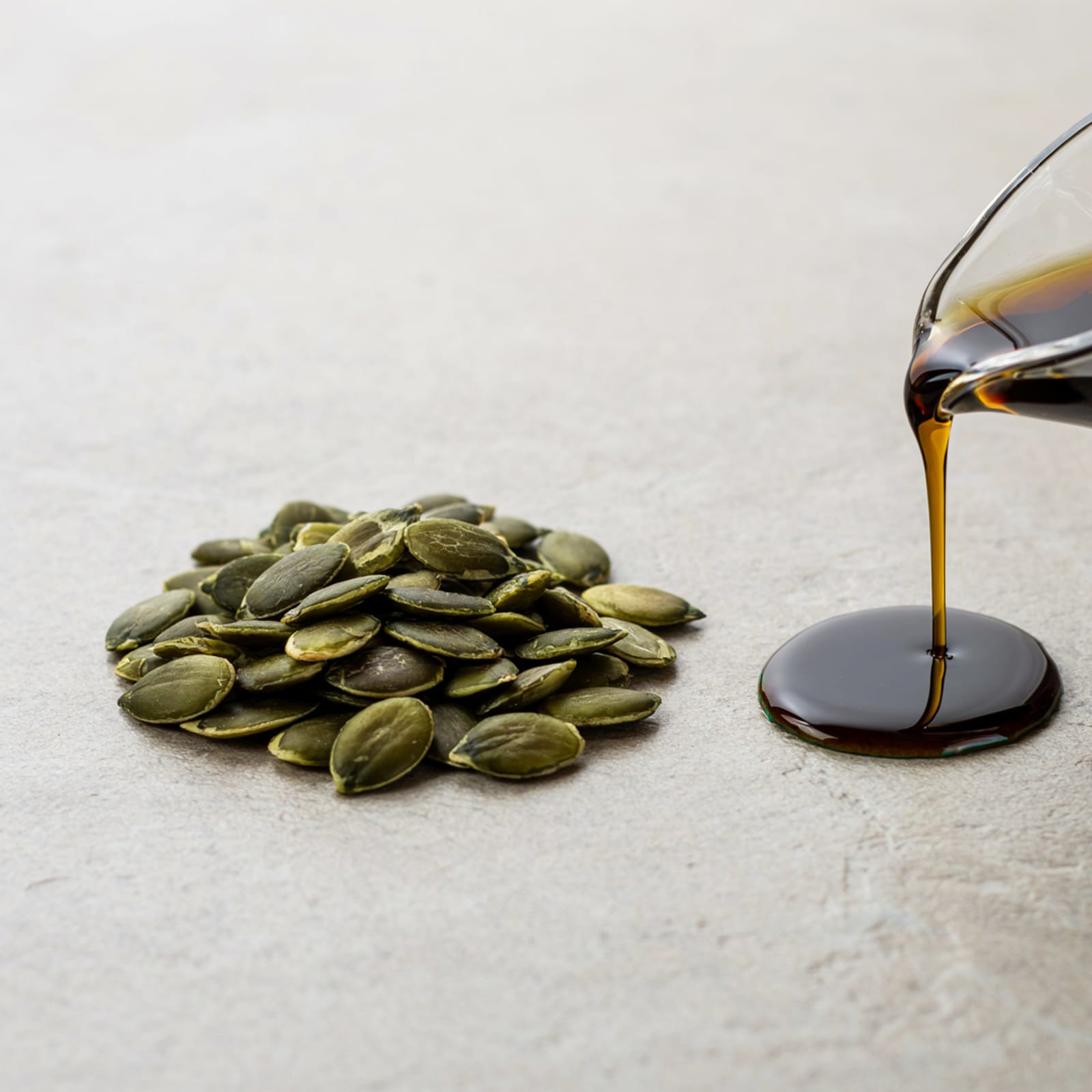
Put a pile of roasted seeds next to a stream of freshly pressed oil and the difference becomes obvious immediately. Whole seeds offer what oil alone can't: fibre, protein, a satisfying texture to chew on. Oil, by contrast, is a concentrated source of fat — rich in unsaturated fatty acids, vitamin E, and the plant sterols characteristic of the oil pumpkin — but without fibre and without the fullness that whole seeds give. Reach for the seeds if you want texture; reach for the oil if you want concentrated flavour. An overview of both nutrient groups sits under the composition of pumpkin seed oil, and the direct protein comparison lives under protein in pumpkin seed oil.
Heat suits the seeds, not the oil
Whole seeds handle heat well. You can toast them in a pan, work them into bread dough, or scatter them over a hot dish without losing their structure. With oil, it works the opposite way: it's a pure finishing product, used cold or lukewarm, drizzled over soups, salads, or cooked vegetables — never into a hot pan. Heat it too much and it loses its aroma while the delicate fatty acids begin to break down. You'll often hear the rule stated plainly: the oil goes on the plate last, never into the pot. Full details sit under pumpkin seed oil and heat.
Why one doesn't replace the other
Swap a handful of seeds for a spoonful of oil on your salad and you get the flavour but lose the bite — and the reverse holds too: scattered seeds alone never bring the dark colour and depth that only the oil carries. Each does its own job on the plate; neither simply takes over the other's role. Anyone who's confused the two once reaches more deliberately next time.
When both land on the plate together
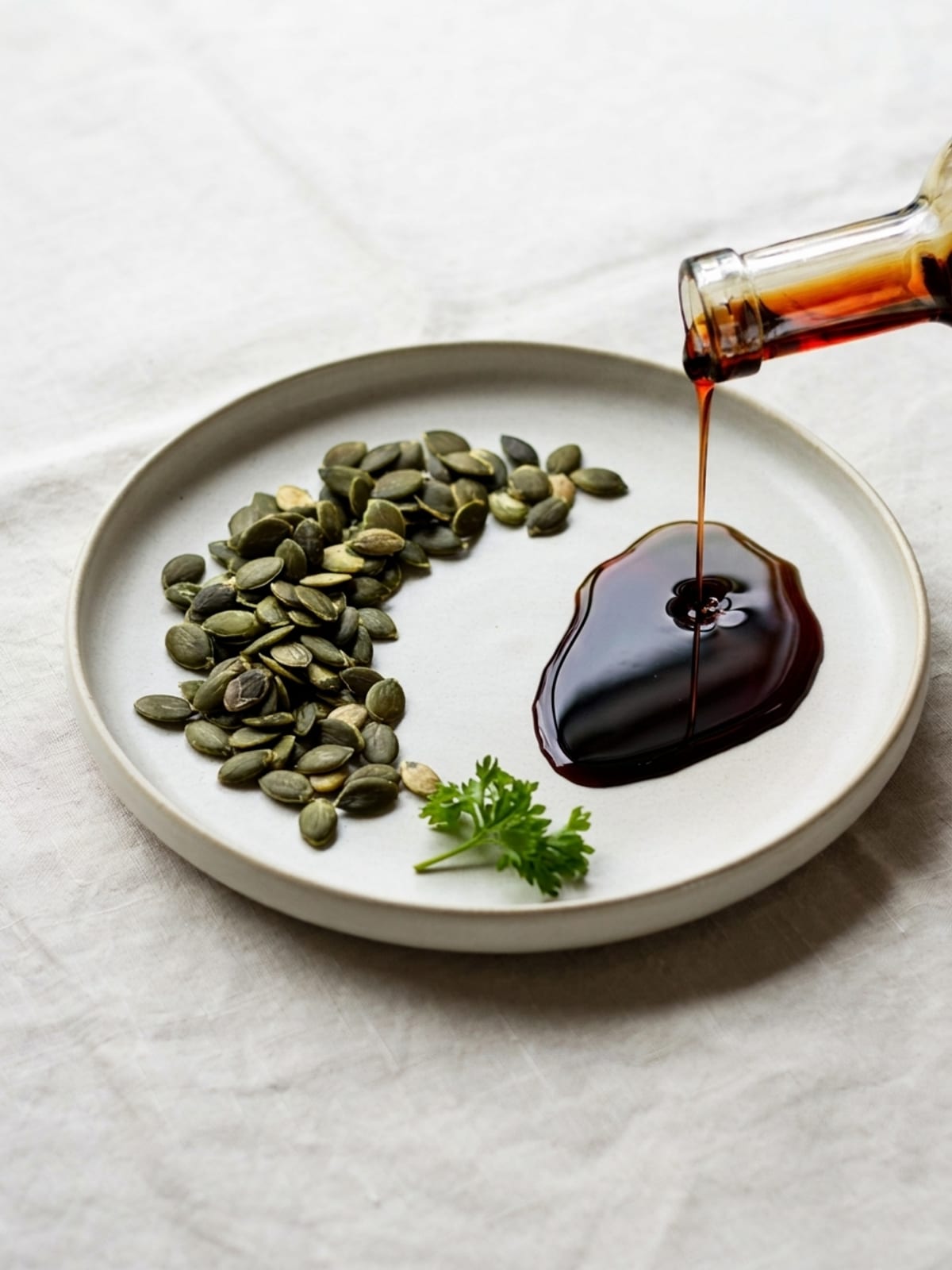
Still, you don't have to choose one over the other entirely. Many classic dishes use both at once: a handful of roasted seeds for the bite, plus a dark thread of oil drawn slowly over the dish, carrying its own layer of flavour. Two textures, two aromas, one plant. A Styrian salad turns exactly that into a principle — seeds on top, oil as the dressing. A recipe built around that idea sits under Styrian pumpkin seed oil salad.
The simple rule of thumb
If you're ever unsure which of the two a recipe means, one short rule helps: seeds are an ingredient with texture, oil is a seasoning with flavour. Whole seeds are allowed to roast, bake, and crunch; oil only goes on at the very end. Stick to that, and you rarely end up swapping one for the other and feeling let down by the result. Why the pressed oil also carries the nickname green gold is its own story.
Get roasted Styrian oil for ice cream
Shop now