The Styrian
Pumpkin Seed Oil Journal
The Styrian
Pumpkin Seed Oil Journal
- The Styrian Pumpkin Seed Oil Journal
Shop EN
pumpkinseedoil.ccShop DE
kuerbiskernoel.cc
About
This website also contains some content created with the support of AI.
Pumpkin Seed Oil at the Supermarket and Drugstore
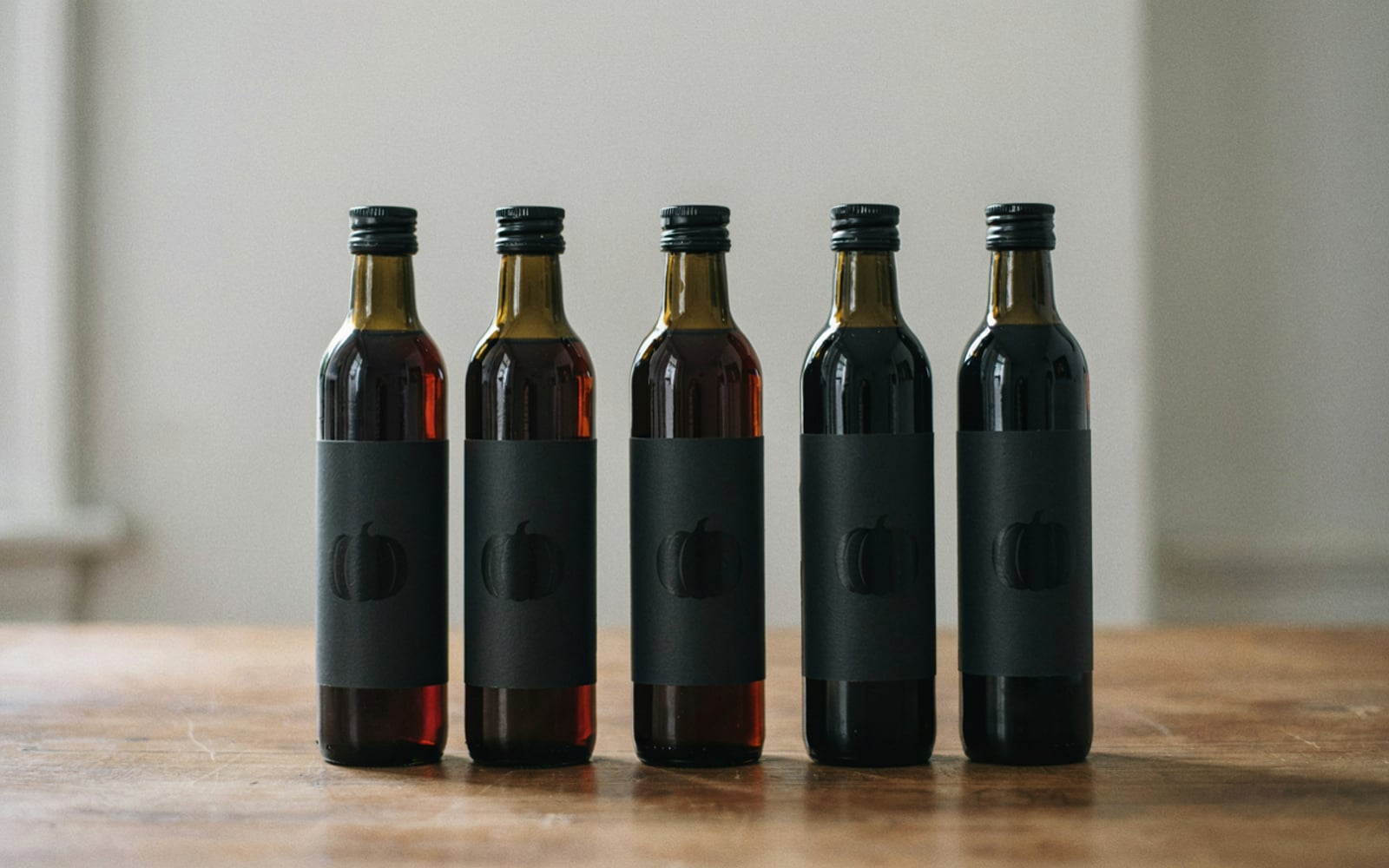
A few years ago, pumpkin seed oil sat almost exclusively on a specialty shelf. Today it sits between olive oil and balsamic vinegar at Aldi, Lidl, or Hofer, at Billa and Spar, at Rewe and Penny — and at drugstores like dm and Rossmann as a matter of course. Availability is good, but the range in quality can be wide. Two bottles can stand side by side, almost identical on the outside, and still differ sharply in origin, pressing method, and taste. Anyone who knows what to look for can sort the genuine article from the well-packaged disappointment in a few minutes.
What to check first: the PGI seal
The eye should go first to a small yellow-and-blue logo: the EU seal for protected geographical indication. It shows up as PGI in English, as g.g.A. in German, and as IGP in several other European languages, alongside the standardised EU logo itself. It means the oil was made from Styrian oil pumpkins grown and pressed within the defined region — following the method set out in the product specification. Without this seal, or without a clearly declared Styrian origin naming a producer, the oil could come from pumpkins of any origin, made by any method. Styrian PGI explains in detail what the certification covers.
Reading past the seal
Even within the PGI category, a second look pays off. A declared harvest or pressing year shows how close the oil is to its flavour peak — a best-before date alone only tells you how long the producer considers the oil good, not when it was actually pressed. Equally useful: the producer's name and address, not just a brand or retail label. Knowing who actually made the oil is a basic form of traceability. Store brands aren't automatically worse for lacking this, but they usually say less precisely about origin within Styria itself. What to check across all these levels is explained under quality checking.
What marks generic and blended products
Other bottles on the same shelf simply read "pumpkin seed oil" — no PGI logo, no declared region, sometimes with a producer address well outside Austria or Slovenia. Behind labels like these can sit oil from standard pumpkin varieties rather than the hull-less Styrian type, cold-pressed without roasting, or blended with other oils to cut costs. That doesn't make them counterfeit — they're simply different products. They just don't taste or behave like genuine Styrian oil: the colour tends to run lighter, the aroma less roasted and complex, the price usually lower. Blends and imports explains the difference between these categories in detail.
Supermarkets and discounters: Aldi, Lidl, Hofer, Billa, Spar, and more
Search specifically for "pumpkin seed oil Aldi," "pumpkin seed oil Lidl," or "pumpkin seed oil Hofer" and you'll mostly find store brands and seasonal promotions — in Austria also at Billa, Spar, and Interspar, in Germany additionally at Rewe and Penny. The range shifts, and not every branch carries the same bottle permanently. What matters is never the chain's name on the receipt, but the label in your hand: PGI seal, a named Styrian producer, ideally a pressing or harvest year. Store-brand pumpkin seed oil from Aldi, Lidl, or Hofer can be a good everyday oil — or a generic oil with no Styrian origin at all. The same test applies at Billa and Spar: without the seal and a clear producer, you're buying a different product, however dark green the bottle looks or however tempting the price. More on why genuine oil costs what it does sits under what pumpkin seed oil costs.
Drugstores: pumpkin seed oil at dm and Rossmann
In the German-speaking market, drugstores like dm and Rossmann regularly stock pumpkin seed oil — often in the health-food or natural cosmetics aisle. Searches like "pumpkin seed oil dm" or "pumpkin seed oil Rossmann" turn up genuine shelf stock there, but very different products. Some are PGI-certified Styrian cooking oils in small bottles, others are unroasted oils meant for skincare or wellness use, not the cooking pot. A skincare oil like this looks similar to cooking oil from the outside but tastes and smells completely different — grassier, far less aromatic — and doesn't belong on a salad. At dm and Rossmann, it's especially worth checking for "suitable for consumption," "roasted," and the PGI logo.
Organic shops and delicatessens
Health food shops and delicatessens usually carry a more carefully chosen range than standard supermarkets, often with clearer producer information and knowledgeable staff who can answer questions. The trade-off is sometimes a higher price for the same product available cheaper elsewhere, and occasionally a narrower selection limited to organic-certified oils — a smaller subset of the certified Styrian category. Organic certification and PGI certification run independently of each other: an oil can carry both, one, or neither.
The simplest rule
Anyone short on time for label-reading can stick to a fixed order: the PGI seal first, then a named Styrian producer, then a pressing or harvest date. A bottle meeting all three criteria is almost always worth buying. A bottle that fails at the very first criterion is a different product, whatever else is printed on it. Anyone who'd rather order from home without standing in front of a shelf finds sources under where to buy where this checking has already been done.
Order authentic green-gold pumpkin seed oil
Shop now