The Styrian
Pumpkin Seed Oil Journal
The Styrian
Pumpkin Seed Oil Journal
- The Styrian Pumpkin Seed Oil Journal
Shop EN
pumpkinseedoil.ccShop DE
kuerbiskernoel.cc
About
This website also contains some content created with the support of AI.
Pumpkin Seed Oil with Eggs
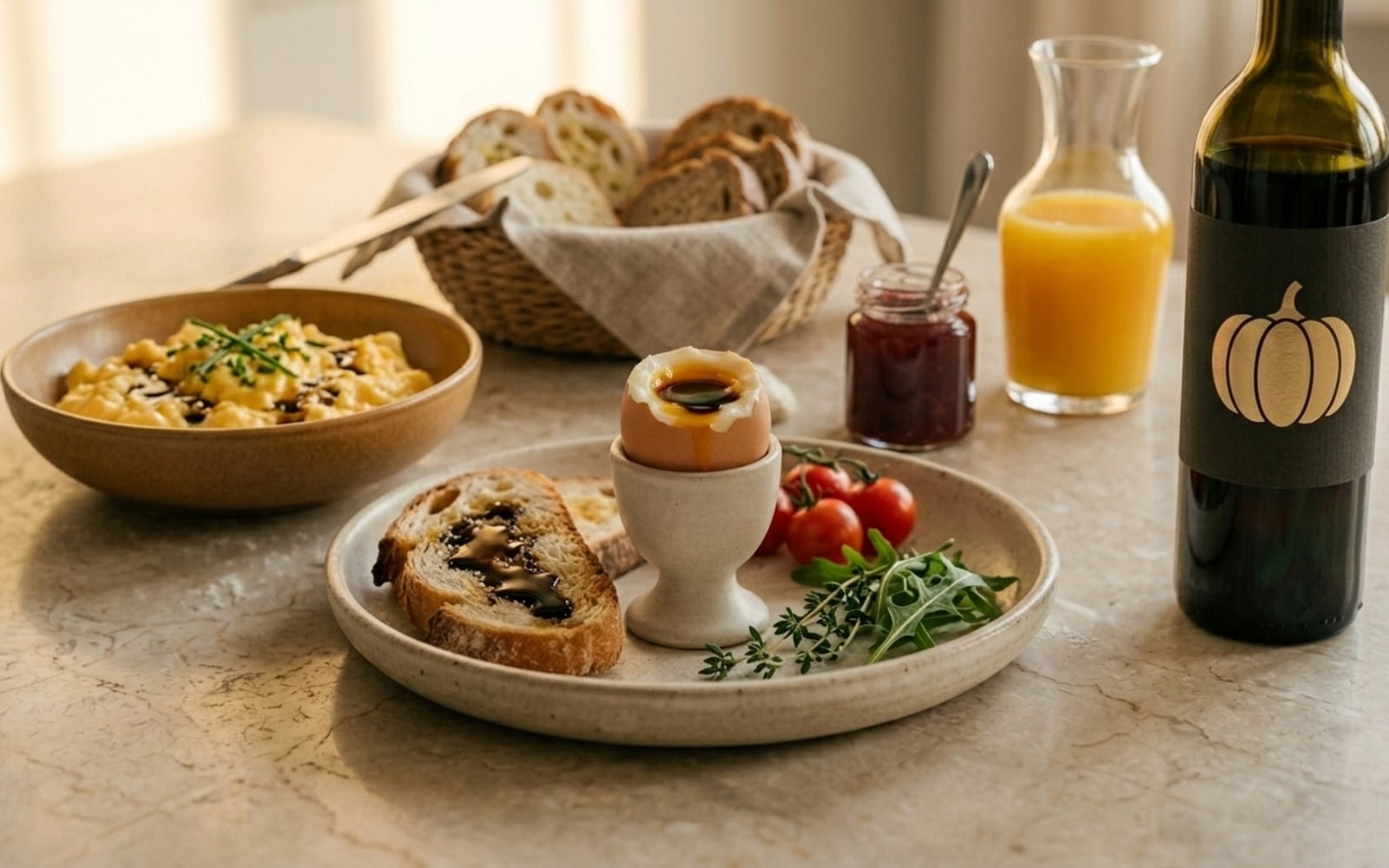
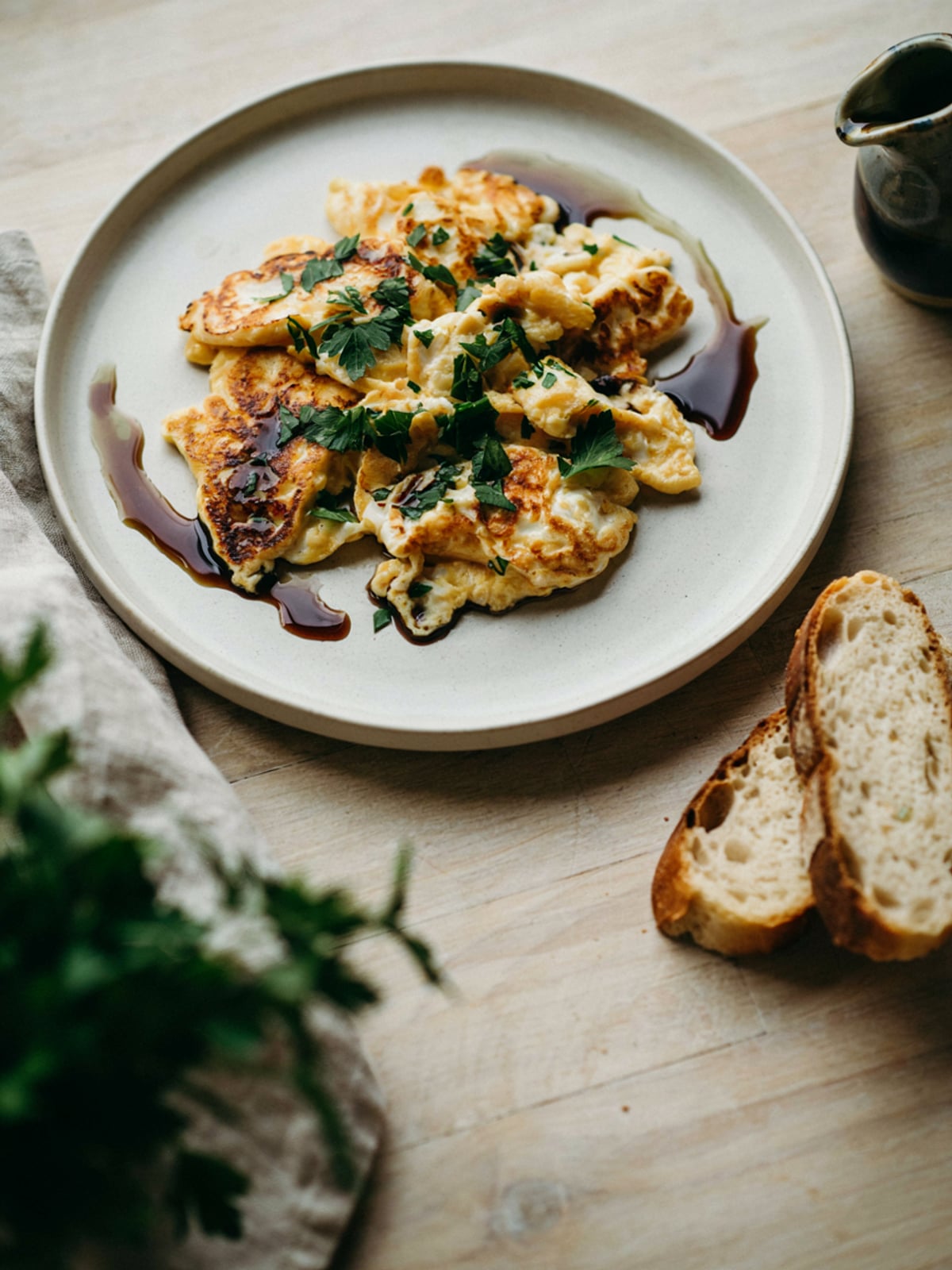
Pumpkin seed oil and eggs belong together in a Styrian kitchen almost more naturally than any other pairing. Anyone who holds the dark bottle over an egg for the first time, instead of saving it for salad or soup, usually understands why within seconds. The oil's deep, roasted nuttiness meets the richness of the yolk without competing against it — a partner, not a rival. And here, as almost everywhere with this oil, the same rule holds: it goes on cold, once the cooking is done, never into the pan.
Why Oil and Egg Work So Well Together
A yolk is naturally rich and mild — exactly the kind of counterweight a bold, roasted oil needs to shine instead of overwhelm. Where a neutral oil would simply disappear into the yolk, pumpkin seed oil stays clearly present without ever pushing the egg aside. Cooks often say it tastes like more, even though nothing else has changed. That, in the end, is the whole appeal of this simple pairing.
Colour as a Sign of Quality
Dark green-black oil sitting on a pale yellow yolk is more than a pretty detail. That colour is proof that real, roasted Styrian oil came out of the bottle — not a paler, stretched substitute. Anyone who has seen both side by side recognises the difference instantly the next time.
A Soft Egg for Breakfast
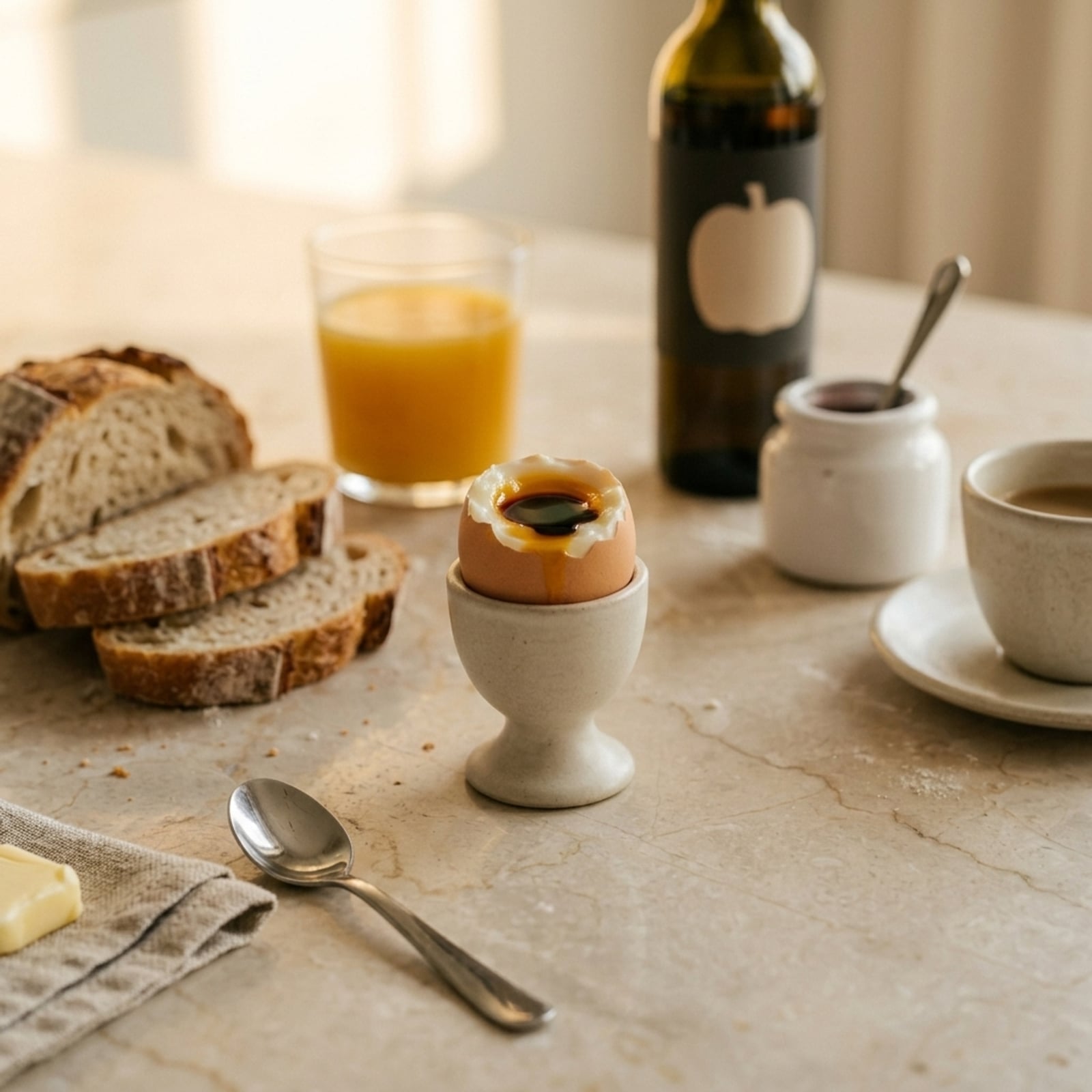
A six-minute egg, set on the outside and still soft in the centre, needs little more than some salt and a few drops of oil to feel properly finished. Halve the egg, sprinkle with flaky salt, then let three or four drops of oil fall right into the hollow, where they settle into the yolk. Two halves on toasted rye bread with a thin layer of cream cheese make a complete breakfast in minutes — and the colour of the oil in the yolk is already the first proof of real quality.
The Trick with Scrambled Eggs
One small but important rule applies to everything that follows: the oil is never cooked with the egg, only added afterwards. Stir it in completely and its flavour thins out; let it sit for just a moment and you get streaks of roasted aroma running through a creamy, neutral egg. That contrast is exactly why the extra step is worth it.
Fried Eggs, Finished at the Table
A fried egg in butter, crisp at the edges with a yolk still trembling, shows off what pumpkin seed oil can do maybe more strikingly than anything else. Deep dark green landing on bright orange yolk is one of the most eye-catching combinations an ordinary kitchen has to offer. The oil goes on after the pan, not before: a teaspoon for one egg, two for two. Rye or sourdough bread on the side soaks up yolk and oil together as a natural sauce.
Scrambled Eggs and a Rule That Surprises
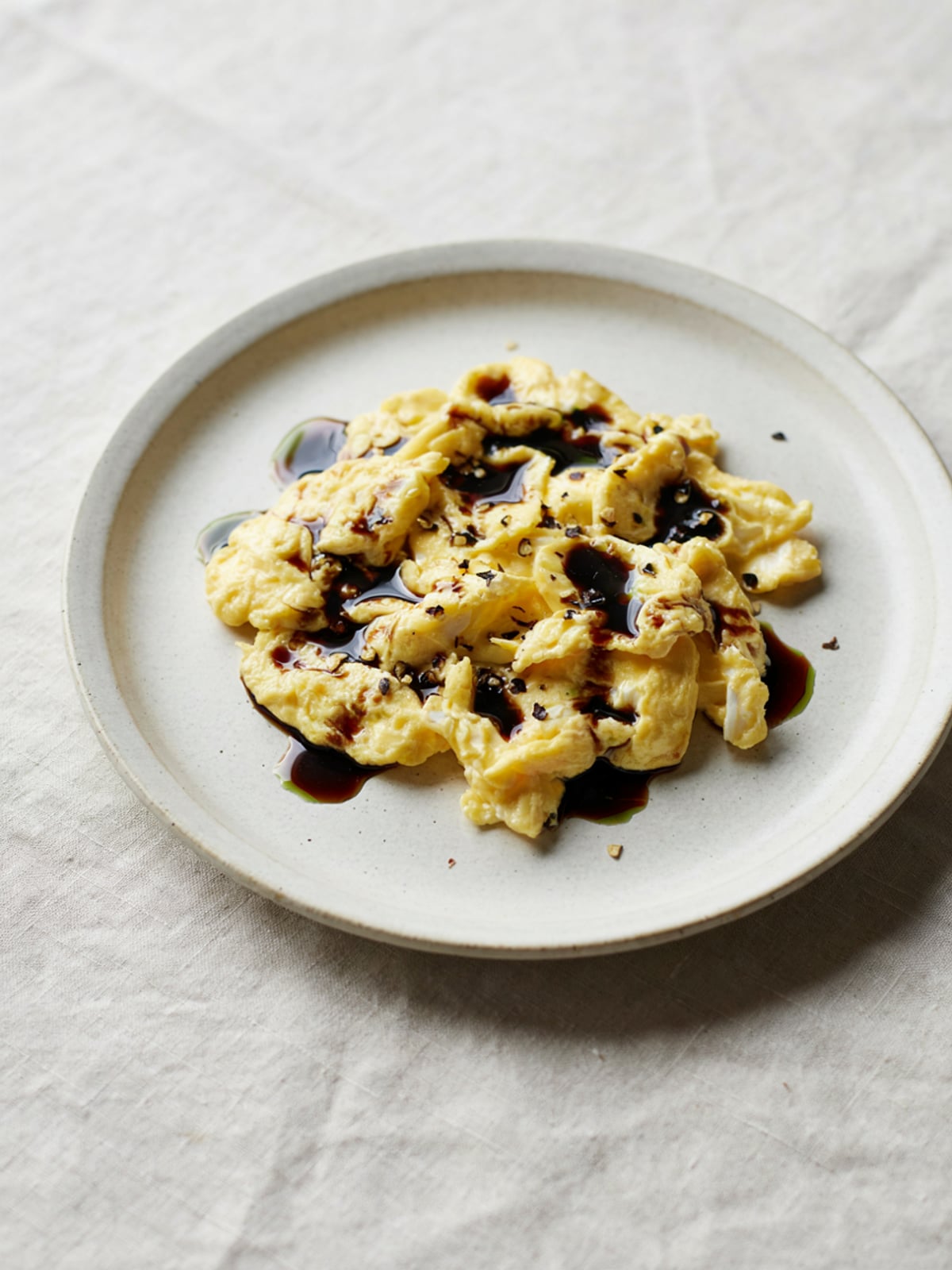
With scrambled eggs, the right order goes against instinct at first. The eggs go into the pan with a little butter, cooked slowly over low heat, and taken off while still a touch underdone — only in the bowl does the oil follow, never earlier in the pan. A teaspoon, folded through once rather than fully stirred in, leaves every bite with its own streak of roasted flavour over creamy egg. A little chive and some flaky salt finish the plate, ready just as quickly as any other scrambled eggs.
Beyond the Breakfast Plate
Eggs with pumpkin seed oil also turn up in more composed salads, pairing hard- or soft-boiled eggs with seasonal vegetables and a dressing built around the oil — more on that under pumpkin seed oil for salad. Other pairings that share this same fondness for yolk-rich richness, including cheese and smoked fish, are gathered under flavour pairings. In the end, the egg remains the simplest and fastest way to show what this oil can do, once you let it play the role of a finishing touch rather than a cooking fat — the same idea explored more broadly under how to use pumpkin seed oil.
Get Austria’s iconic pumpkin seed oil
Shop now