The Styrian
Pumpkin Seed Oil Journal
The Styrian
Pumpkin Seed Oil Journal
- The Styrian Pumpkin Seed Oil Journal
Shop EN
pumpkinseedoil.ccShop DE
kuerbiskernoel.cc
About
This website also contains some content created with the support of AI.
Pumpkin Seed Oil as a Substitute — and When Not To
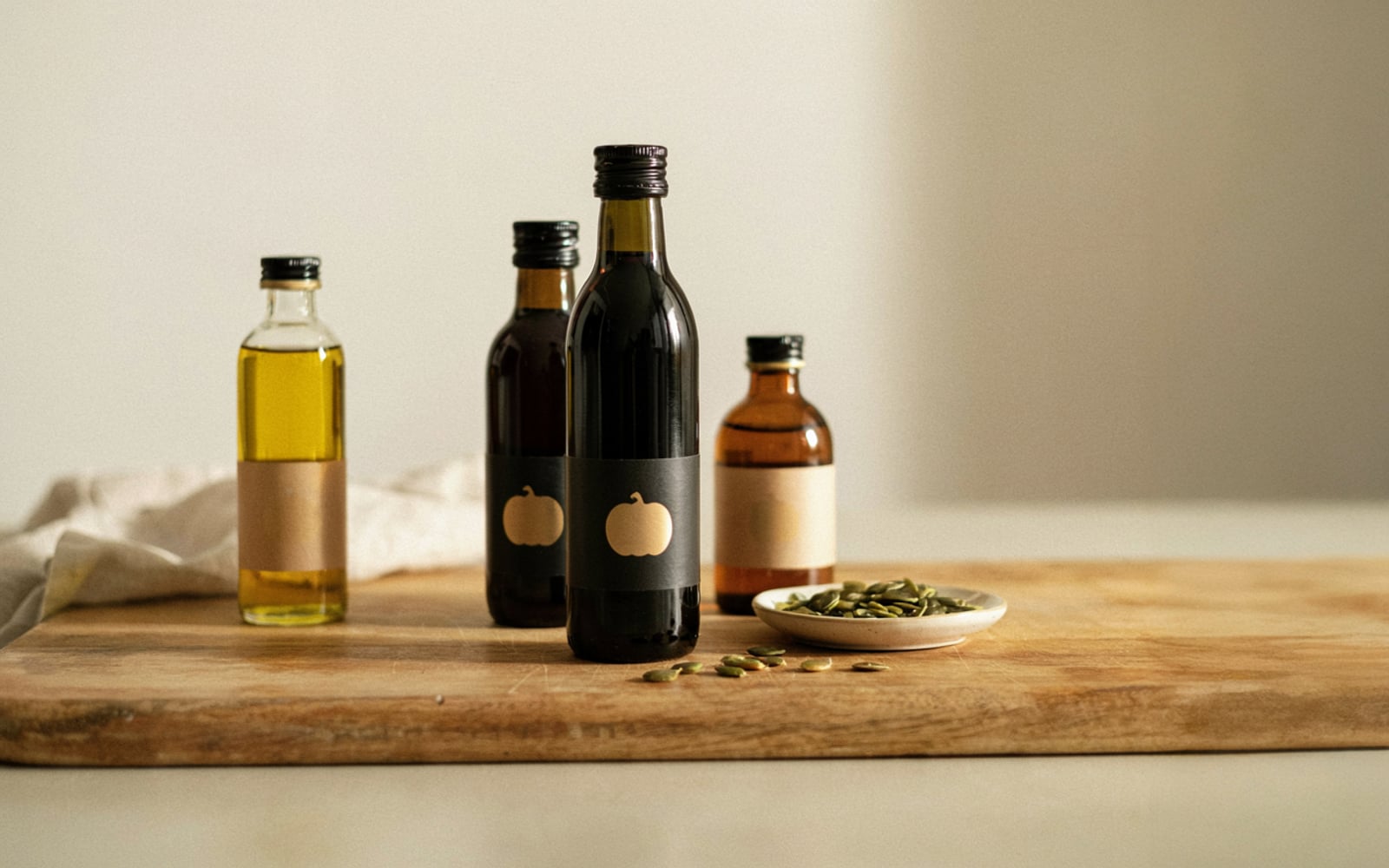
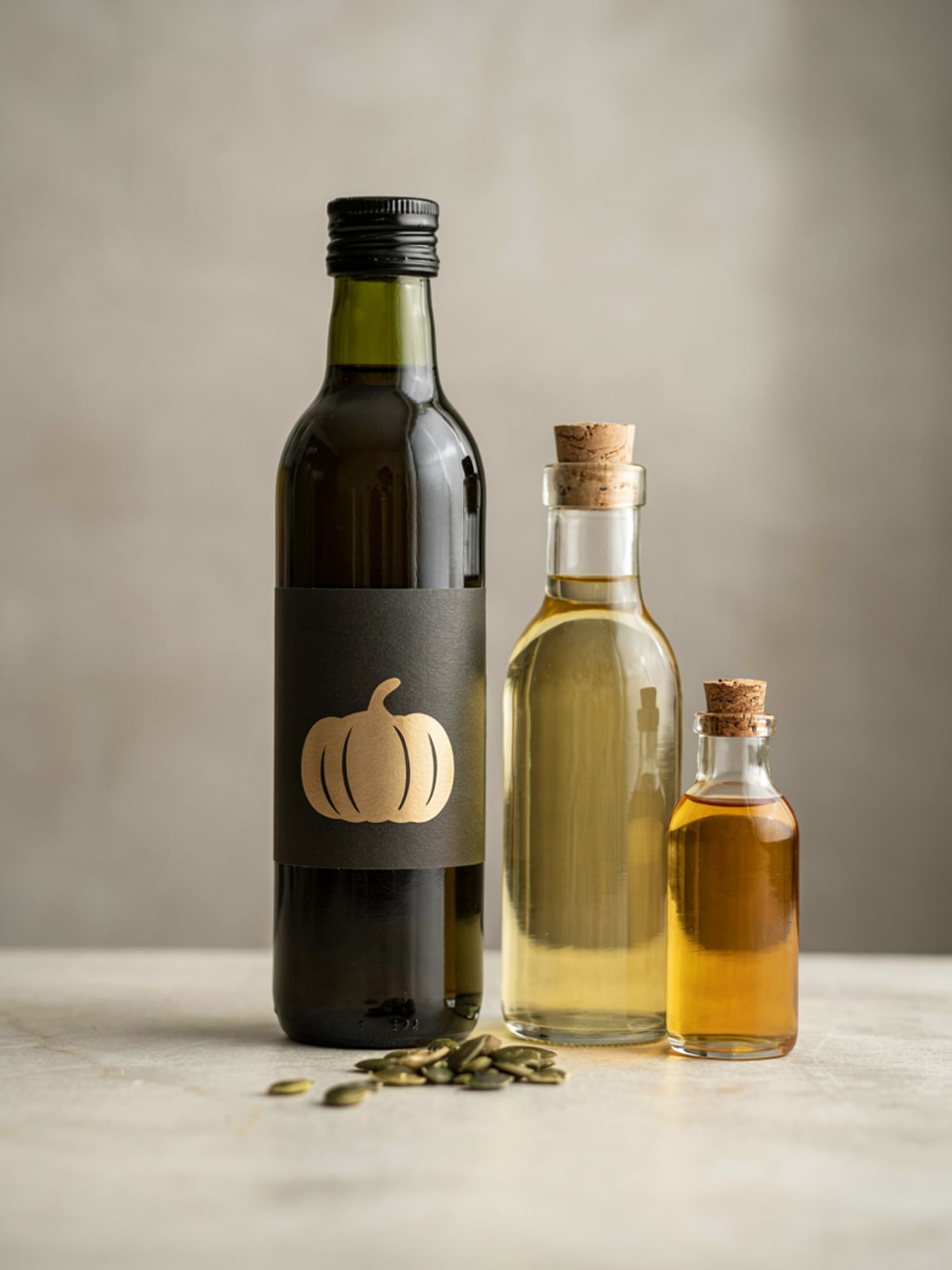
That exact moment is often the first time anyone wonders whether pumpkin seed oil can stand in wherever olive oil, walnut oil, or sesame oil usually goes. The answer is rarely a simple yes or no. All these oils share the same territory — dressings, finishing drizzles, dips — yet pumpkin seed oil brings such a bold, distinctive character that a simple swap can quickly turn into a different dish altogether.
The Question the Kitchen Almost Asks Itself
Anyone who cooks often enough knows this moment: one bottle is empty, another is standing ready, and the question is whether the swap will actually work. With pumpkin seed oil, that question is especially worth asking, because the answer changes from case to case. Sometimes the oil lifts a dish in a pleasant way; sometimes it takes over so completely that little of the original recipe remains.
What Stays True for Every Swap
One rule holds for almost every substitution: pumpkin seed oil is stronger than most of the oils it replaces. Swap it one for one, and it risks covering everything else on the plate. A safer starting point sits at about two-thirds of the usual amount — from there, taste and adjust, rather than tipping the dish over from the first pour.
A Salad That Shows Where Olive Oil Can Step Aside
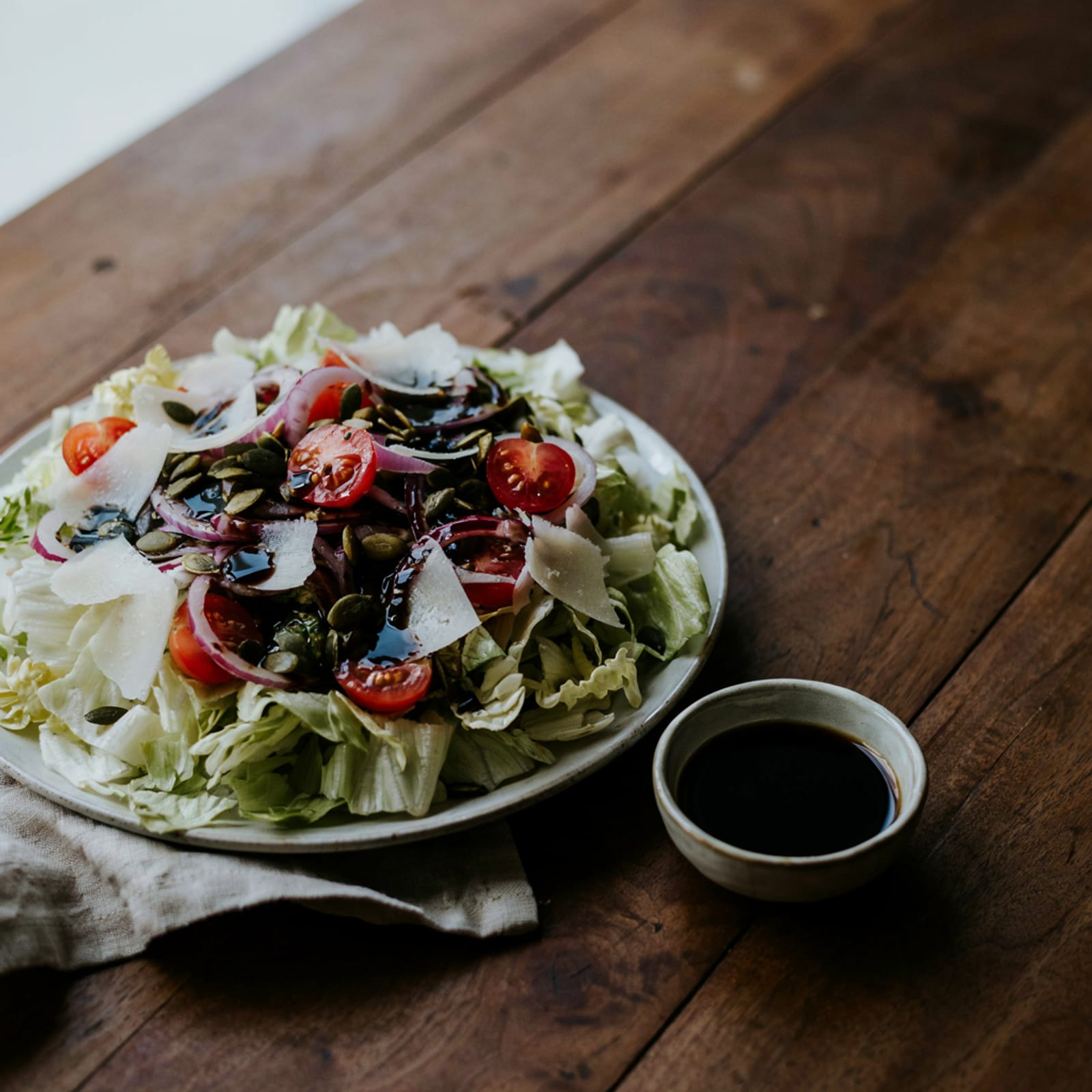
In cold, savoury dishes, pumpkin seed oil often replaces extra virgin olive oil with impressive results. Drizzled over a dressed leaf salad, it turns a mild dressing into one with noticeably more depth — especially next to bitter leaves, blue cheese, or smoked ingredients. Over roasted vegetables, warm soup, or fresh bread, it takes on the same finishing role as olive oil, only with a roasted rather than grassy aroma. In a dip made from labneh or ricotta, a drizzle across the surface reliably replaces the usual olive oil thread.
Where Sesame Oil Steps Back
Toasted sesame oil is the finishing oil of choice in many Asian-inspired dishes — for stir-fries finished at the table, for dips and noodle bowls. Pumpkin seed oil can step in here and stay in the same category: roasted, nutty, round. The overall feel shifts noticeably though, more toward Central Europe than East Asia. Where sesame only adds a final nutty note over something fairly neutral, the swap works well; where it is woven into a mix of soy sauce, ginger, and rice vinegar, it changes the dish more visibly.
Sweet or Sharp: The Difference from Walnut Oil
Walnut and hazelnut oil most often appear over salads, roasted beetroot, or warm grain dishes, often alongside blue cheese. The roasted, slightly bitter nuttiness of pumpkin seed oil overlaps strongly with toasted walnut oil, so a one-to-one swap works in most vinaigrettes. While walnut oil tends to sit well next to sweeter elements like honey, pear, or dried fruit, pumpkin seed oil unfolds better next to sharper notes: vinegar, mustard, pickled vegetables.
A Vinaigrette Where Everything Meets
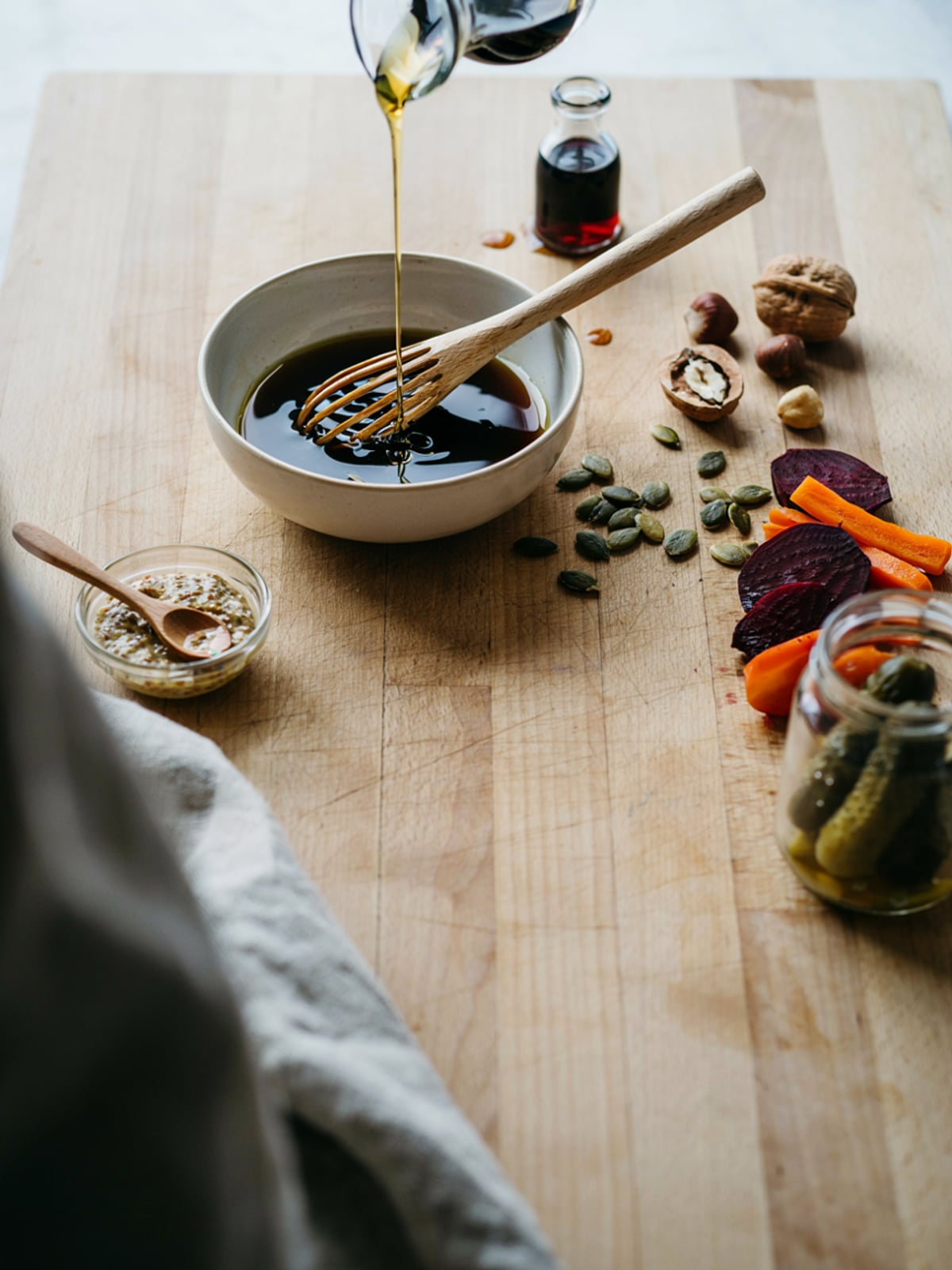
This is exactly where the difference shows up most clearly: vinegar and a little mustard get whisked into a small emulsion, then the oil flows in as a thin stream until everything holds together. Over roasted root vegetables or a simple slaw, this vinaigrette unfolds precisely that earthy, sharp side that sets pumpkin seed oil apart from sweeter nut oils. How these dressings come together in more detail is covered under pumpkin seed oil in dressing.
Where It Does Not Work
As a cooking fat, pumpkin seed oil falls short: it is a cold-use finishing oil that quickly loses its character under heat and turns bitter. Unlike extra virgin olive oil, which tolerates gentle sautéing, pumpkin seed oil never belongs in a hot pan or a simmering sauce. It barely works in sweet baking either — partly because of the heat, partly because its intensity is hard to balance there. What heat does to the oil's aromatic compounds is explained under cooking with pumpkin seed oil; a full overview of where it genuinely belongs sits under how to use pumpkin seed oil, and what sets the different varieties apart in flavour is covered under types of pumpkin seed oil.
Shop premium Styrian pumpkin seed oil
Shop now