The Styrian
Pumpkin Seed Oil Journal
The Styrian
Pumpkin Seed Oil Journal
- The Styrian Pumpkin Seed Oil Journal
Shop EN
pumpkinseedoil.ccShop DE
kuerbiskernoel.cc
About
This website also contains some content created with the support of AI.
How to Use Pumpkin Seed Oil in the Kitchen
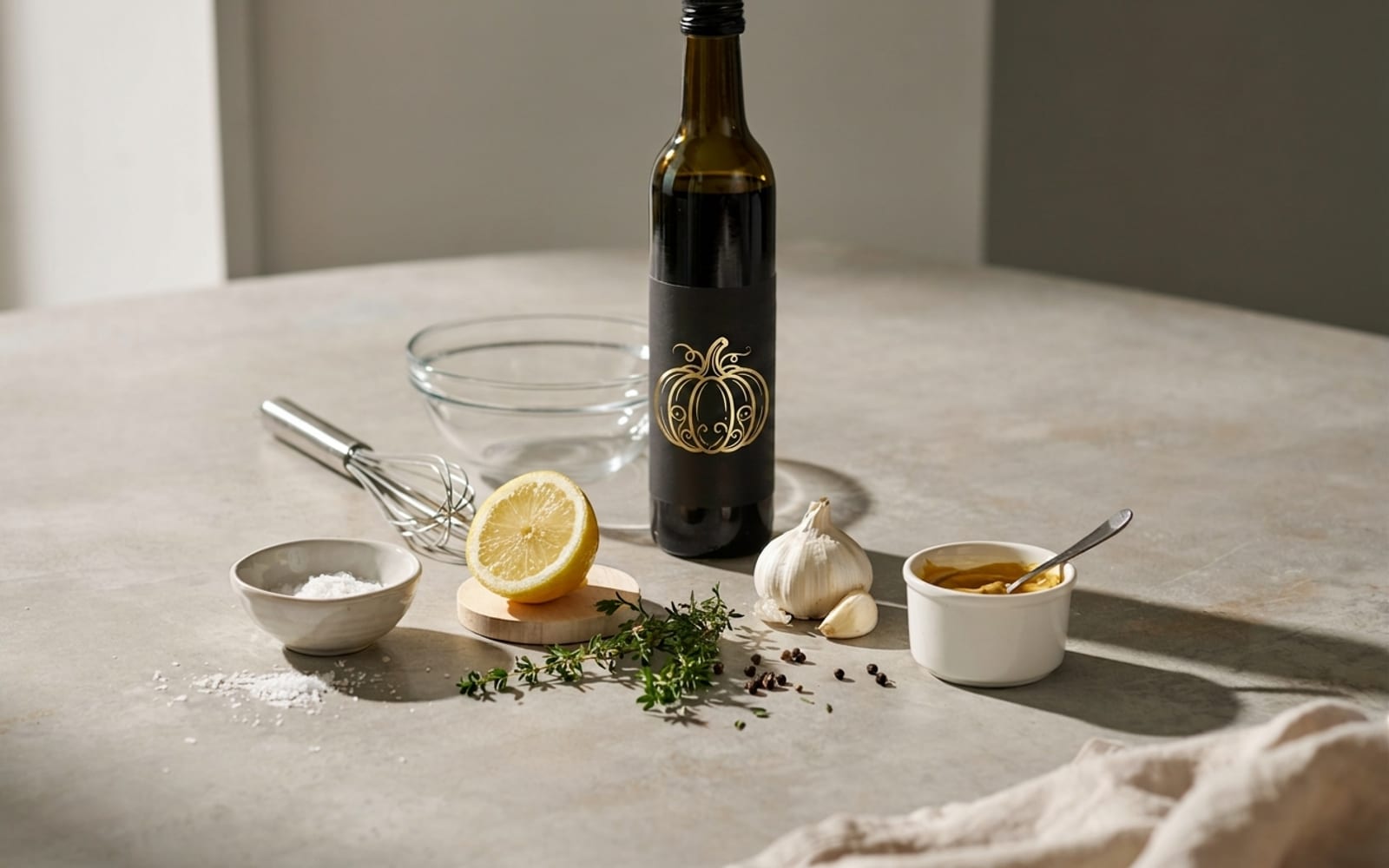
The bottle usually lives somewhere within reach — not shoved to the back of the cupboard, not quite at the front either. Open it, and that warm, roasted smell arrives first: bold, faintly smoky, unlike any other oil in the kitchen. This is where the real use of pumpkin seed oil begins — not at the hot stove, but just before or just after it, wherever the oil is still allowed to be itself. Anyone using it for the first time almost always pours too generously. A few simple habits fix that fast.
Start with the Right Amount
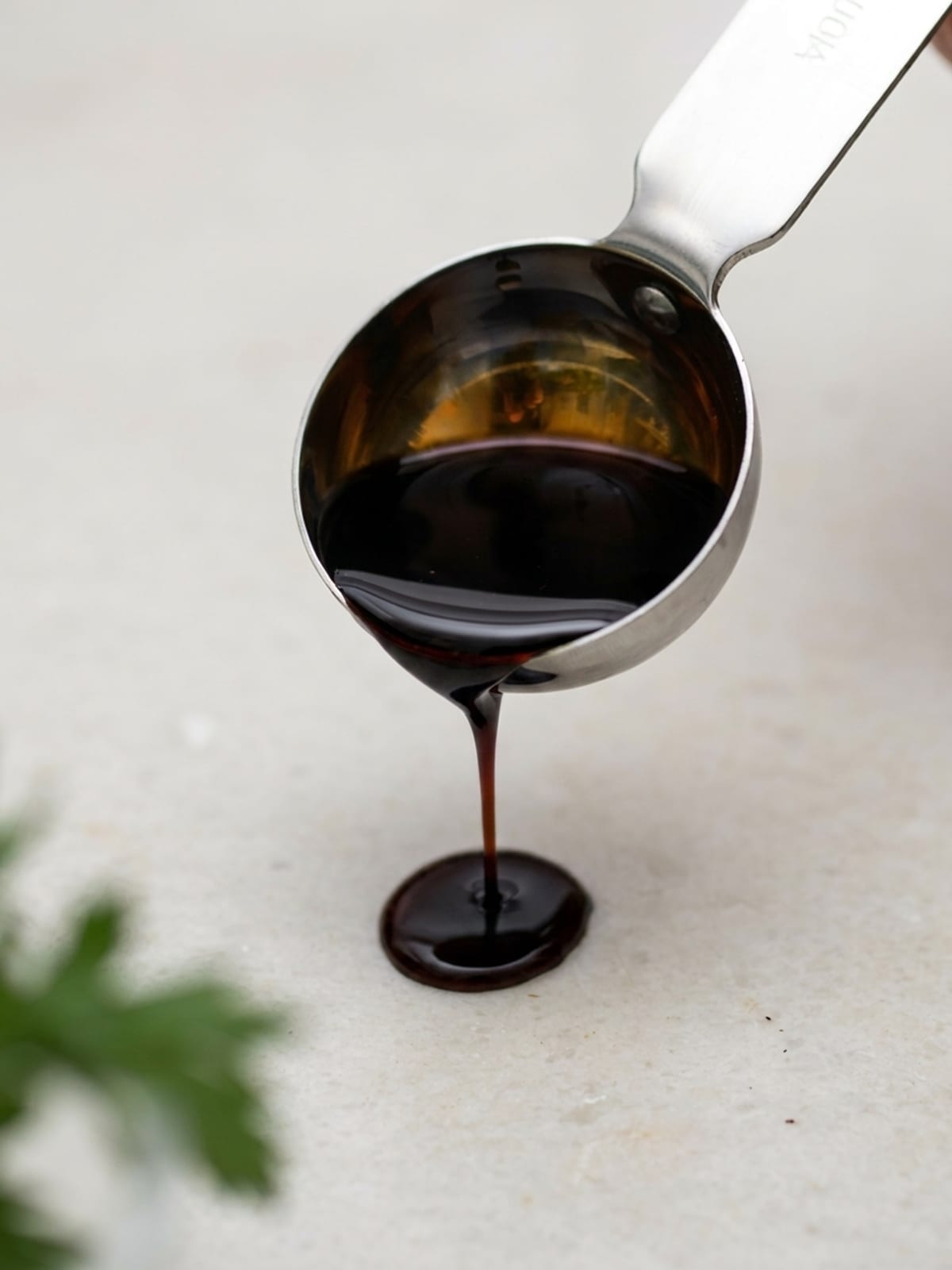
The most common mistake in the first weeks is using too much. One tablespoon is plenty for a salad for two; two tablespoons will flatten every other flavour on the plate, and that shows on the first bite. Over a bowl of soup, a single teaspoon in a thin line is enough. Over ice cream, even half a teaspoon does the job. Start light. It is always easy to add more, almost impossible to take any back.
The Classic Vinaigrette
One tablespoon of pumpkin seed oil, two teaspoons of apple cider vinegar, a pinch of salt, a small pinch of sugar or a few drops of honey — a Styrian pumpkin seed oil dressing for two rarely needs more than that. The balance leans sharper than a classic French vinaigrette, because the oil is strong enough to carry more vinegar without turning flat. Taste it, then adjust: too intense, and a teaspoon of neutral oil pulls it back. The dressing goes over the salad only right before serving, folded through gently, never stirred in.
For something creamier, whisk in a quarter teaspoon of Dijon mustard per portion before the oil goes in. It binds the mixture and adds another layer underneath — good with potato salad or grain salad, where a thicker dressing clings better to every piece.
Soup with the Oil Spiral
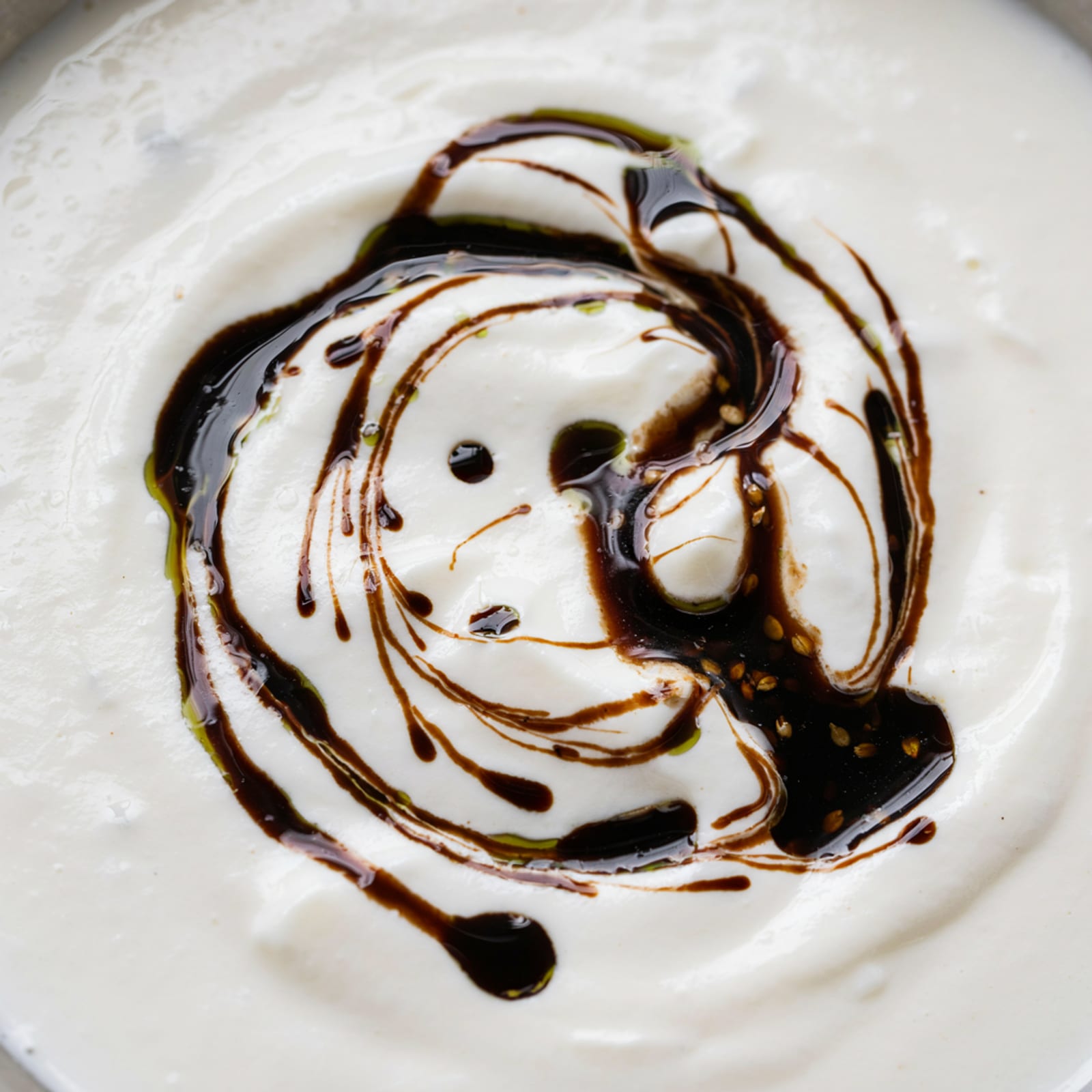
A creamy pumpkin soup for four starts with pumpkin, onion and a little garlic softening slowly, then blending smooth with vegetable stock. The moment the soup sits in warmed bowls is the one people wait for: a teaspoon of oil, drawn slowly from the rim toward the centre, until a thin dark line rests across the pale surface. A small spoon of crème fraîche in the middle, a few toasted seeds scattered on top, and the bowl goes straight to the table. That contrast between warm orange and deep green is part of the pleasure.
Finishing Hot Dishes
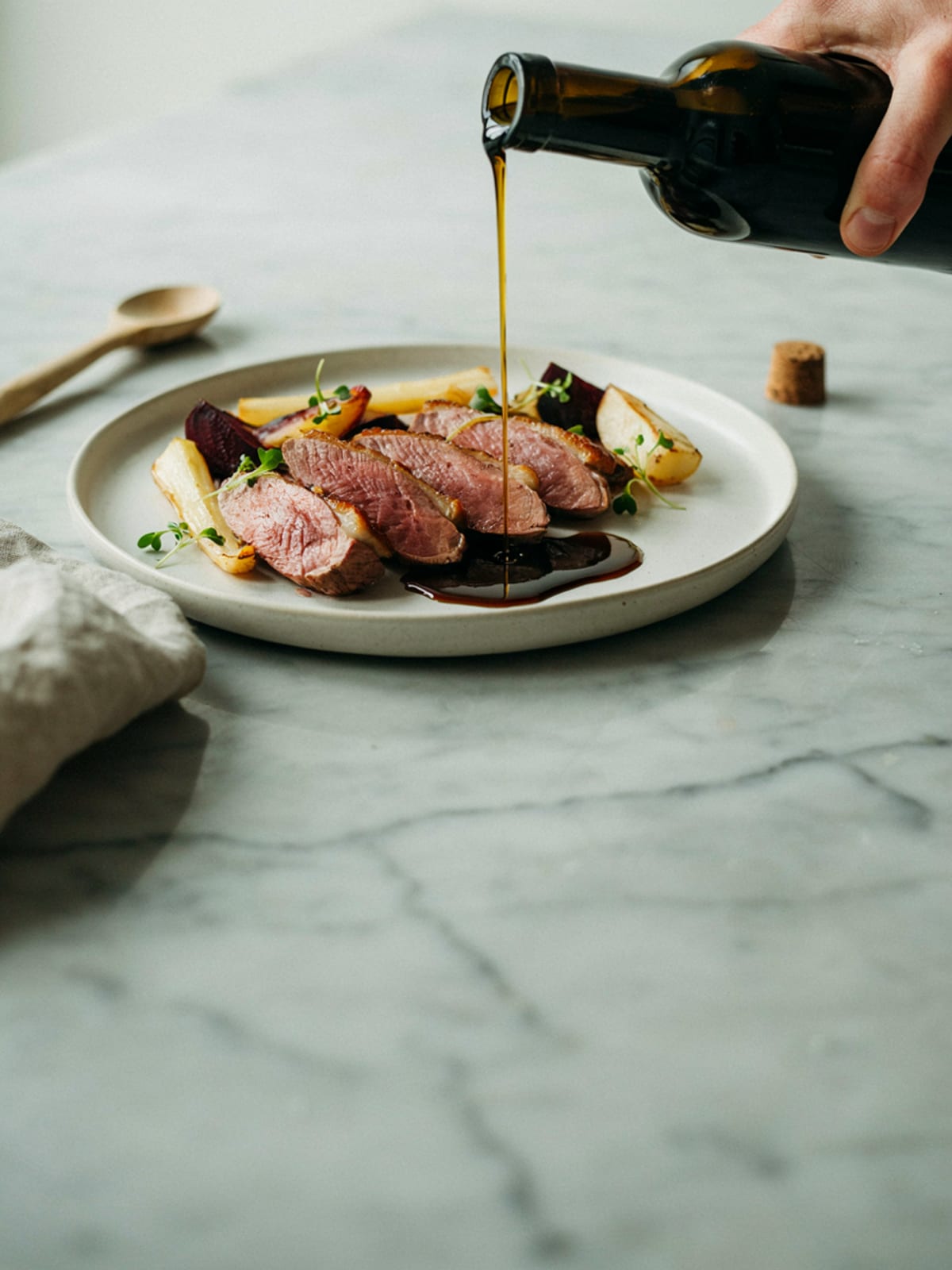
With hot food, timing matters more than anything else. Plate the dish first, then add the oil last, right before it reaches the table. The residual warmth of the bowl gently opens up the aroma without harming the delicate compounds that carry it. The same order applies to soups, roasted vegetables, grain dishes and warm salads alike. What never works is adding the oil to a pan or pot still on the heat — contact with hot metal alone is enough to start breaking it down. More on heat and why frying with it never quite works is under can you heat or fry with pumpkin seed oil.
Ice Cream: Cold Sweetness, Warm Core
This pairing needs almost no preparation. One or two scoops of good vanilla ice cream in a chilled bowl, then about half a teaspoon of oil poured with a steady hand — a bottle with a narrow spout gives far more control than a wide jar. The oil settles into the little hollows between scoops and needs to reach the table while the contrast is still fresh. Cold sweetness meets warm, savoury nuttiness; the two never blend, they just sit together in a small, pleasant tension.
Bread and Cheese: One Deliberate Drop
A small amount of pumpkin seed oil on a board with good bread and aged cheese may be the simplest way to show what this ingredient does. For dipping, it behaves a little like a good olive oil, but with its own roasted, nutty character entirely. It suits semi-hard and hard cheeses especially well — mountain cheese, aged Gouda — because the nuttiness underlines the milky flavour instead of covering it. Stirred into cream cheese or ricotta, it becomes a spread for rye bread: one teaspoon of oil per hundred grams of cheese, salt, and a little thyme or chive if you like. Anyone who makes this often ends up saying the same thing — one drop too few can always be topped up, one too many cannot be undone.
Baking: When It Fits
In baking, pumpkin seed oil works best at moderate temperatures under 200 degrees, in recipes where a light nuttiness is welcome rather than distracting. Replace up to half the neutral oil in muffins, quick breads or seed crackers. The flavour comes through more quietly than in a cold application, since the oven heat carries off some of the volatile aromas — but the characteristic nuttiness survives, and pairs well with whole grain flour, pumpkin seeds and spices like cinnamon or nutmeg. Never replace all the neutral oil; the result turns intense fast. By the end of the day, the bottle is back exactly where it belongs — within reach, carrying the same smell it had the very first time the cap came off.
Shop finishing oil from Styria, Austria
Shop now